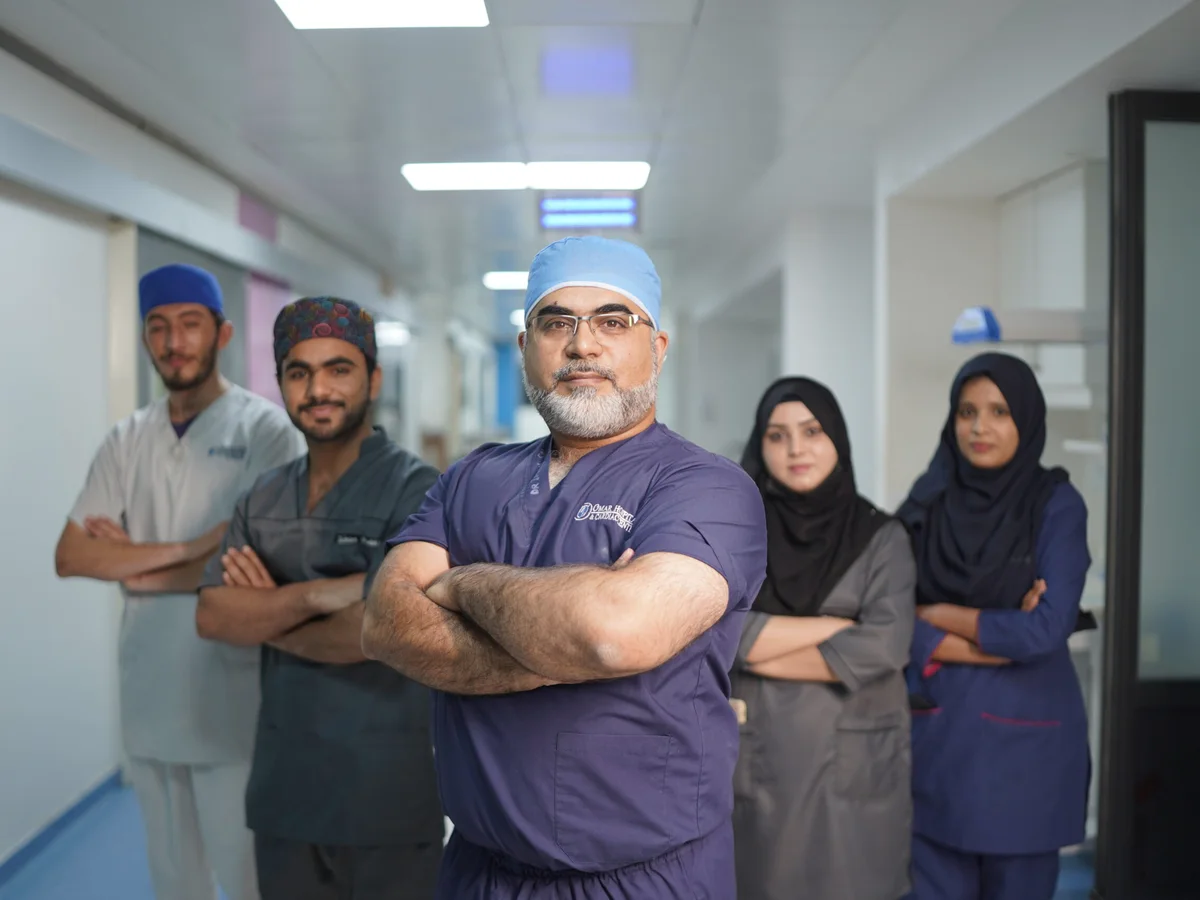
This guide explains the operation, recovery and risks in plain words. Dr Imran Salim Malik does knee replacements at Omar Hospital & Cardiac Centre, Johar Town, Lahore.
What goes wrong in a painful knee?
The knee joins the thigh and shin bones. Smooth cartilage (a cushioning layer) covers the bone ends. When arthritis or an injury wears it away, bone rubs on bone. This causes pain and swelling.
What is a total knee replacement?
The surgeon removes the worn surfaces of the knee and fits new metal and plastic parts. The aim is less pain, better movement and easier daily life.
Most new knees last a long time. In large joint registries, more than 9 in 10 total knee replacements are still working after 15 years.
When do you need a knee replacement?
1. Osteoarthritis (wear-and-tear arthritis)
The knee joint wears out. This is common in older people and causes pain and stiffness.
2. Rheumatoid arthritis
The body's defence (immune) system attacks the knee lining, which swells and gets damaged over time.
3. An old injury or fracture
A badly healed knee injury can cause long-term damage.
4. Other treatments have not helped
When rest, medicine and physiotherapy no longer help, surgery may be suggested.
5. Pain stops you moving
If you cannot walk or climb stairs because of pain, surgery might help.
Sounds like your parent? WhatsApp the knee X-ray to +92 300 4890692 to book a consultation. Dr Malik will need to examine your parent before advising on surgery. Other treatment may be tried first.
How is the operation done?
Here is what happens, step by step:
| Step | What happens |
|---|---|
| Anesthesia | The patient is put to sleep (general anesthesia) or numbed from the waist down (spinal anesthesia). |
| The cut | The doctor makes a straight cut on the knee. |
| Reaching the joint | The muscles are moved aside to reach the knee joint. |
| Removing worn surfaces | Damaged bone and cartilage are removed. |
| Fitting the new parts | The new metal and plastic parts are fixed in place. |
| Checking the knee | The surgeon checks that the new knee moves and lines up well. |
| Closing the cut | The cut is closed with stitches or staples. |
| Recovery room | The patient goes to a room for rest and checks. |
The operation usually takes about two hours. The patient may start moving the new knee on the same day or the next day.
Questions families ask
Choosing a knee surgeon in Lahore: what to check
Choosing a surgeon is a big family decision. Check these things:
- Check on the PMDC website that the surgeon is registered.
- Ask how many knee replacements they do.
- Ask about the risks and the cost before you decide.
- Ask who does the operation and who plans the physiotherapy.
Already been told you need an operation? A second opinion is your right. Bring your reports and Dr Malik will go through your options with you, including non-surgical ones.
Dr Imran Salim Malik is an orthopedic and trauma surgeon at Omar Hospital & Cardiac Centre, Lahore. He has more than 20 years of experience in orthopedic surgery. He does total and partial knee replacement and performs every operation himself. He plans physiotherapy and follow-up through recovery. He uses a smaller cut (minimally invasive surgery) when it suits the patient.
Recovery: what to expect after a knee replacement
Physiotherapy (guided exercise) is a big part of healing. Most patients follow this path:
First 2 Weeks
- Use a walker or crutches to move
- Do light exercises at home, and practise stairs with the physiotherapist
- Pain and swelling are treated with medicine
Weeks 3 to 6
- Walk longer distances each day
- Go for regular physiotherapy
After 6 Weeks
- Most patients can walk without help
- Start doing housework and errands
After 3 Months
- Go back to swimming or light cycling
- Most people feel strong and walk with ease
Everyone heals at their own speed. Dr Malik's team plans your physiotherapy and check-ups.
A new knee usually bends enough for stairs and a chair. Kneeling, squatting and sitting cross-legged on the floor may stay difficult after a knee replacement. Many people pray on a chair. Dr Malik will tell you what is safe for you.
Questions? WhatsApp +92 300 4890692.
What to arrange at home
- A walker or crutches for the first weeks
- A raised toilet seat or commode chair, as squatting is hard at first
- A firm chair with arms that is not too low
- Someone to stay with the patient for the first two weeks
What problems can happen after surgery?
Most people recover well. Still, some problems can happen:
- Infection near the wound
- Blood clots in the leg or lungs
- Pain or stiffness that lasts longer than expected. The knee may not bend fully; doing your physio exercises every day is the main way to prevent stiffness.
- Wear or loosening of the new joint over time (uncommon), which may need another operation
- Nerve or blood-vessel injury during surgery (rare)
How are these problems prevented?
Antibiotics around the time of surgery lower the risk of infection. Blood thinners help prevent clots. You may be given blood-thinning medicine to take at home for some weeks. Take it exactly as prescribed. Regular check-ups follow.
Stop smoking and all tobacco, including naswar and chewing tobacco. It slows bone and wound healing.
Call the clinic on +92 300 4890692 the same day if:
- the wound is red, hot, swollen or leaking, or you have a fever
- the calf is painful or swollen, or the leg is warm and red
If you cannot reach the clinic, go to the nearest emergency department.
Go to the nearest emergency department now or call Rescue 1122 for chest pain or sudden breathlessness.
Is a knee replacement right for your parent?
A knee replacement helps many people with severe arthritis when other treatments have stopped working. Most return to walking and daily tasks.
Want to find out if it could suit your mother or father? WhatsApp the knee X-ray to book a consultation. Dr Malik will examine them before advising on surgery.
Questions families ask
How long is the hospital stay?
The hospital stay is usually about 3 days. Most patients go home walking with a walker or crutches.
Is it safe for an older parent with sugar or blood pressure?
Many people with knee arthritis are older and also have sugar or blood pressure. Before surgery, the patient's health is checked carefully, including the heart. Dr Malik will explain the benefits and risks for your parent, and what can be done to lower those risks. Do not stop any blood thinner or heart medicine on your own. Dr Malik and your heart doctor will tell you what to do before surgery.
How much does it cost?
The consultation fee depends on the hospital you visit. We tell you the exact fee on WhatsApp before you book, so there are no surprises. A follow-up visit within 5 days of your first consultation is free to go through your reports and scans. The cost of surgery depends on the operation, the implant, the room and the nights in hospital. It is explained to you before you decide.
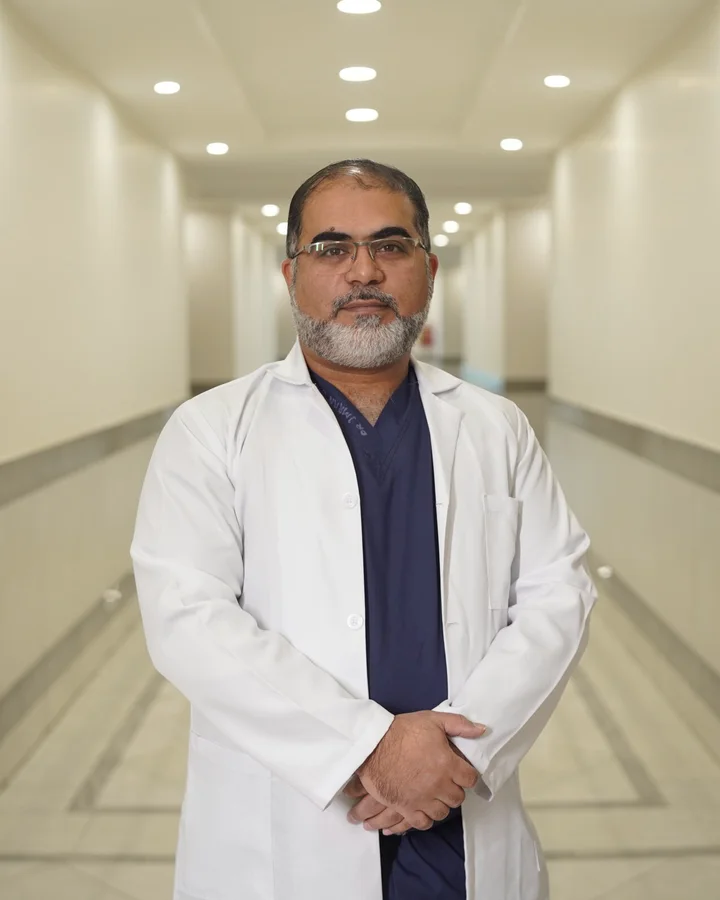
From the clinics of Dr Imran Salim Malik, orthopaedic and trauma surgeon. MBBS (Allama Iqbal Medical College) · MS (Trauma & Orthopaedics) · PMDC Reg. 39646-P. Every patient is different: Dr Malik will tell you what applies to you.