
Home › Treatments › Knee replacement
Knee replacement in Lahore
Is knee pain making walking, stairs or prayer hard for you or your parent? Dr Imran Salim Malik does total and partial knee replacement, with the risks and the cost explained before you decide.
Operations at Omar Hospital & Cardiac Centre, Johar Town.
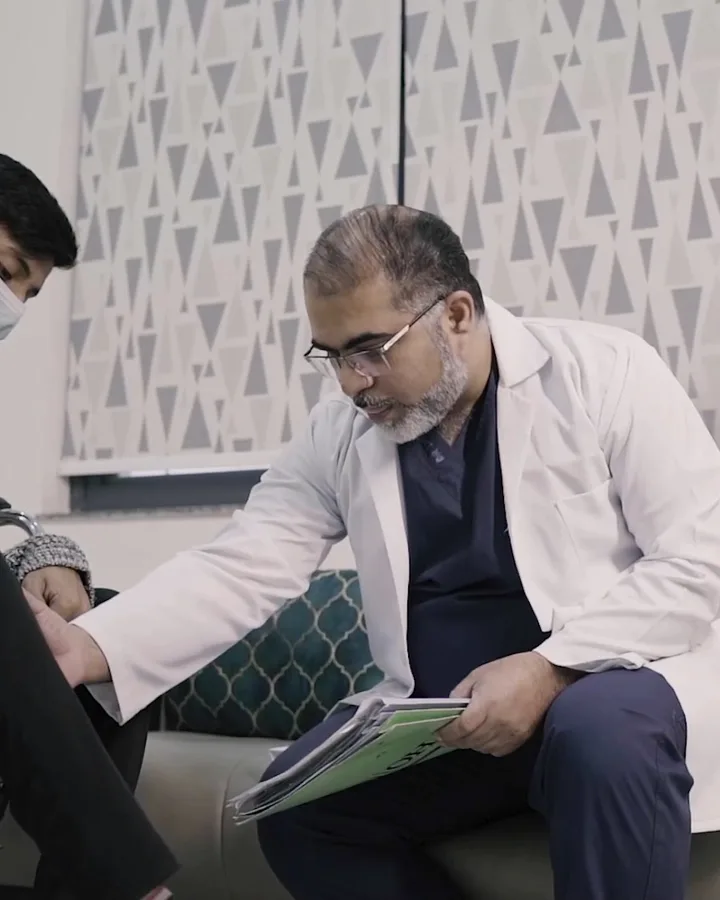
Do you need a new knee yet?
Not every painful knee needs an operation. Dr Malik examines the knee and the X-ray first, then advises the right step for you.
What Dr Malik may advise first
- Exercises with a physiotherapist to strengthen the leg
- The right pain medicines for your parent’s health
- Advice on weight, if it is adding to the strain
- For some, an injection into the knee
When he may advise a new knee
- Other treatment is no longer helping enough
- The pain stops you walking or sleeping
- The X-ray shows the joint is badly worn
Not sure yet? WhatsApp the knee X-ray and the patient’s age to book a consultation. Dr Malik will examine the knee before advising on surgery.
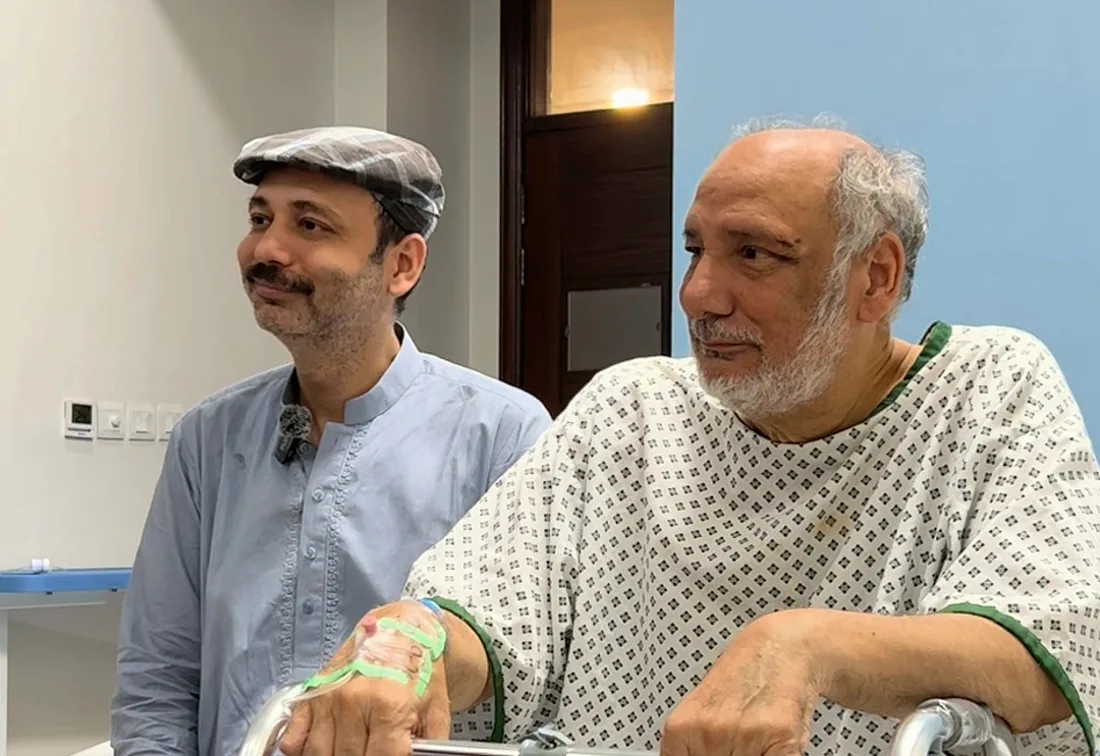
“Operation ka jab main ne suna… main bhi dar gaya.”
“Hamare jitne bhi … sawalaat the, woh un se pehli meeting mein hi hal ho gaye.”
“When I heard the word operation, I was scared too. All our questions were answered in the very first meeting.”
Farooq Haider, whose father had both knees replaced
What to know before you decide
The stay is usually about 3 days after the operation. Older patients, or those with other health problems, may need longer.
It depends on the implant, the room and the nights in hospital. You know it before you decide.
Blood tests, blood pressure, sugar and heart checks, and the anaesthetist sees your parent. Where needed, a heart specialist too.
Every knee replacement uses standard steps, including antibiotics around the time of surgery. Infection is still a possible risk.
It aims to disturb less of the muscle around the knee. It is not right for everyone, and recovery speed varies.
Kneeling, squatting and sitting cross-legged may stay difficult. Many people pray on a chair. Dr Malik will tell you what is safe.
Recovery, step by step
Every patient is different. As a guide, and Dr Malik gives you your own timetable:
- A walker
- A commode or raised toilet seat
- A chair for prayer
Blood-thinning medicine may be given for some weeks: take it exactly as prescribed. Stop smoking and all tobacco, including naswar. It slows healing.
The day after surgery
Most people start walking with a walker, with a physiotherapist’s help.
After a few days
Home, for most patients.
First 2 weeks
A walker or crutches, light exercises at home, stair practice with the physiotherapist, and medicine for pain and swelling.
Weeks 3 to 6
Longer walks each day and regular physiotherapy. Many people move from the walker to a stick, and can bend the knee enough for stairs and a chair.
After 6 weeks
Most people walk without help. Driving usually around 6 weeks, and only when Dr Malik agrees.
After 3 months
Most daily activities. Full recovery can take longer.
Questions families ask about knee replacement
Is my mother too old for this?
Knee replacement helps most patients, including older patients. What matters most is general health. Before surgery, blood tests, blood pressure, sugar (diabetes) and heart checks are done, and the anaesthetist sees the patient. Where needed, a heart specialist checks too.
Is it safe? What are the risks?
Knee replacement is a common, well-established operation, and most patients do well. As with any operation, there are some risks, such as infection, a blood clot or a stiff knee. Dr Malik checks your parent’s health first, explains each risk and how it is kept low, and answers every question before you decide.
How long does it take? Will I be awake?
Usually 1.5 to 2 hours. It is usually done under spinal or epidural anaesthesia, an injection in the back so you feel nothing from the waist down. Some patients are fully asleep instead. The anaesthetist explains the choice before surgery.
How long does a new knee last?
In large joint registries, more than 9 in 10 total knee replacements are still working after 15 years, and about 8 in 10 after 25 years. Partial replacements are more likely to need a further operation. It also depends on activity, weight and general health.
Can both knees be done at the same time?
Sometimes. It is a bigger operation, so it suits only some fitter patients. Many people have one knee done first and the other later.
How much does it cost?
The consultation fee is told to you on WhatsApp before you book. A follow-up visit within 5 days of your first consultation is free to go through your reports and scans. The cost of surgery depends on the implant, the room and the nights in hospital, and is explained before you decide.
Already told you need an operation? A second opinion is your right. Ask us on WhatsApp.
Book a consultation
WhatsApp or call +92 300 4890692. Urdu or English, whichever you prefer.
What to send us
- The patient’s name and age
- The problem, in a line or two
- A photo of any X-ray or MRI