This guide is from Dr Imran Salim Malik, orthopedic and trauma surgeon at Omar Hospital & Cardiac Centre, Lahore.
Recovery timeline: week by week
- In hospital: You may get out of bed with a walker within 24 hours. The stay is usually about 3 days.
- Weeks 1–2: You are at home, using a walker. Gentle exercises help the knee bend and straighten. Pain and swelling are common.
- Weeks 3–6: As your leg gets stronger, you may move to a walking stick, and pain starts to ease. By week 6, you may manage most daily tasks. Driving is usually possible around 6 weeks, and only when Dr Malik agrees. You need to be off strong painkillers and able to press the brake hard without pain. After a right-knee operation it often takes longer.
- By 3 months: Many people are back to normal routines with much less pain. Strength and movement can keep improving for up to a year.
Planning a knee replacement for a parent, or have questions about recovery? WhatsApp +92 300 4890692.
Every patient is different. Dr Malik will tell you what to expect for you or your parent.
Managing pain after surgery
In hospital, pain is controlled with medicines, ice or a nerve block (an injection that numbs the leg). At home, take pain medicine on time so you can exercise. Ice packs and raising the leg on pillows also help.
Pain medicine can cause constipation, so drink water and eat fruit and vegetables. If a medicine makes you sleepy or sick, tell your doctor.
Physiotherapy and exercise
Physiotherapy (guided exercise) starts the day after surgery. A therapist shows you simple exercises to bend and straighten the knee, and helps you walk with a walker. You then keep exercising daily at home.
It may hurt or feel hard at first. That is normal. Most people who exercise daily walk better, manage stairs sooner and get back to normal life earlier.
Walking aids and a safer home
Most people use a walker at first, then switch to a walking stick after some weeks. Hold the stick in the hand opposite your operated leg. Keep using the walker or stick until your doctor or therapist says you can stop.
- Remove loose rugs or clutter from floors.
- Use a raised toilet seat if needed.
- Place a chair or stool in the shower.
- Use chairs with armrests to help you stand up.
- Keep medicines, phones, and water nearby.
Prayer, toilet and stairs
- Pray seated on a chair at first.
- Avoid floor sitting, sitting cross-legged and squat toilets. Use a commode or a raised toilet seat.
- On stairs, go up with the good leg first and down with the operated leg first.
Kneeling, squatting and sitting cross-legged on the floor may stay difficult after a knee replacement. Many people pray on a chair. It is wise to keep the raised toilet seat too. Dr Malik will tell you what is safe for you.
Food that helps healing
Eat protein, such as meat, eggs, dairy or daal (lentils). Milk and yogurt give calcium for strong bones. Fruit and vegetables give vitamins and fibre. Drink 6 to 8 glasses of water a day.
If your doctor has told you to limit fluids or salt for your heart or kidneys, follow that advice instead.
Cut down on salt, which can make swelling worse, and on fried and sugary food.
Stop smoking and all tobacco, including naswar and chewing tobacco. It slows bone and wound healing.
Warning signs to watch for
Problems after surgery are not common, but you should know what to look for.
- Infection: a wound that is red, hot, swollen or leaking, or chills or a fever. Keep the wound clean and dry, as you were shown.
- Blood clots: swelling in the calf or thigh, or calf pain. Moving your feet and ankles often helps blood flow. Dr Malik will usually give you medicine to prevent clots. You may need to take it at home for some weeks. Take it exactly as prescribed.
Worried about any of these signs? Call or WhatsApp +92 300 4890692 the same day.
Go to the nearest emergency department now, or call Rescue 1122, after a fall onto the knee if you cannot stand on the leg, or if the wound opens.
If the clinic is closed or you cannot reach us, go to the nearest emergency department.
Sudden chest pain or trouble breathing? Go to the nearest emergency department now or call Rescue 1122.
Moving your knee every day helps prevent stiffness. Other problems are less common. They include pain that lasts longer than expected, a knee that stays stiff, nerve injury, or the new joint wearing or loosening over time, which may need another operation. Dr Malik will explain your own risks before surgery.
Feelings and family support
You may feel low in the first few weeks. It is part of healing, and it usually passes. Notice small gains, like more bend or a few more steps each day. Time with family and friends helps.
Let your family help, and talk about how you feel. If you feel very sad or anxious, tell your doctor. Some find comfort in prayer. You are not alone in this.
Getting back on your feet
Healing takes time. Most people go from a walker, to a stick, to walking on their own, and enjoy daily life again with much less pain.
Questions families ask
Is a knee replacement safe for my parent at their age?
Knee replacement helps most patients move better, including older patients. Every operation has risks, such as infection, blood clots, stiffness or ongoing pain.
Before surgery, your parent has tests such as blood tests, an ECG and a chest X-ray. Diabetes, blood pressure and heart problems are checked, with an anaesthetist review and a heart specialist if needed. Dr Malik will go through the risks for your parent before you decide.
How much does it cost?
The consultation fee depends on the hospital you visit. We tell you the exact fee on WhatsApp before you book, so there are no surprises. A follow-up visit within 5 days of your first consultation is free to go through your reports and scans.
The cost of surgery depends on the operation, the implant, the room and the nights in hospital. It is explained to you before you decide.
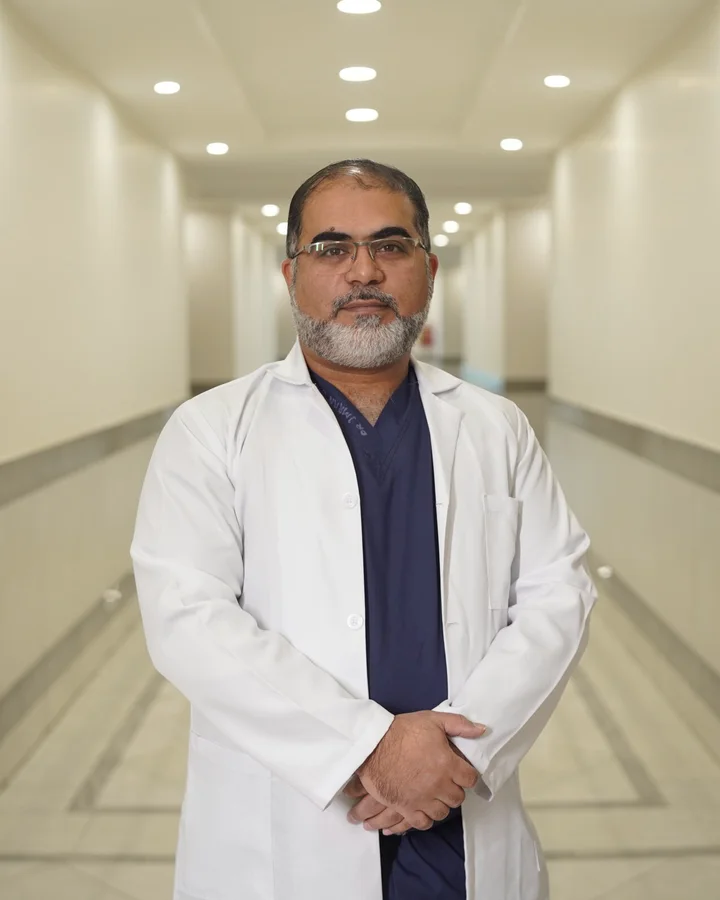
From the clinics of Dr Imran Salim Malik, orthopaedic and trauma surgeon. MBBS (Allama Iqbal Medical College) · MS (Trauma & Orthopaedics) · PMDC Reg. 39646-P. Every patient is different: Dr Malik will tell you what applies to you.