The aim is less pain and easier movement. Most people start walking, with support, within a day or two.
When is joint replacement needed?
For most joint problems that are not emergencies, surgery is considered only after medicines, injections or physiotherapy have not helped. A broken hip is different and often needs an operation soon.
The most common reason for a new joint is osteoarthritis (wear-and-tear arthritis), which causes lasting pain and damage. An injury or arthritis with swelling can also lead to it.
Is it safe at my parent's age?
This is a common worry. Before any decision, Dr Imran Salim Malik checks your parent's general health, including heart, blood sugar and blood pressure. He explains the benefits and risks to the whole family before you decide.
Do not stop any blood thinner or heart medicine on your own. Dr Malik and your heart doctor will tell you what to do before surgery.
Knee Replacement Surgery
What Is Total Knee Replacement?
Total knee replacement is for severe knee arthritis. The operation takes about 1.5 to 2 hours. You have a spinal anaesthetic (an injection in the back that numbs the legs) or a general anaesthetic (fully asleep).
Some patients also have a nerve block or a thin tube in the back (epidural) to ease pain afterwards. Dr Malik will tell you which suits you.
The surgeon makes a straight cut over the knee, removes the damaged bone surfaces and fixes the new joint in place. Most people start walking, with help, the next morning. The hospital stay is usually about 3 days.
In large national joint registries, more than 9 in 10 total knee replacements still work after 15 years, and about 8 in 10 after 25.
Types of knee replacement
- Total: the whole knee joint is replaced, when all of it is damaged.
- Partial: only the damaged part of the knee is replaced.
- Both knees at once: both knees are replaced in one operation. It is a bigger operation, so it is only done if your heart and general health allow. Otherwise one knee is done first and the other a few weeks or months later.
- Revision (redo): a worn or failed implant is replaced with a new one.
Hip Replacement Surgery
In a total hip replacement, the worn ball at the upper end of the thigh bone is removed and replaced. The hip socket is replaced too.
It is advised for severe hip arthritis. Most patients walk within one or two days and stay in hospital a few days. Full recovery can take a few months.
In large national joint registries, about 9 in 10 total hip replacements still work after 15 years, and nearly 6 in 10 after 25.
Not sure if your parent needs a new knee or hip? WhatsApp the X-ray to +92 300 4890692 to book a consultation. Dr Malik will need to examine your parent before advising on surgery.
Types of hip replacement
- Total: the whole hip joint, ball and socket, is replaced. This suits most people with hip arthritis.
- Partial (half): only the ball is replaced. It is mostly used after a broken hip, often in older or frailer patients. Some fit, active older patients with a broken hip are offered a total hip replacement instead.
- Revision (redo): an old implant is removed and a new one put in.
Fall or suspected broken bone? Go to the nearest emergency department now, or call Rescue 1122, if the person cannot stand or put weight on the leg, a limb looks bent or a bone is showing, a hand or foot is cold, pale or numb, there is heavy bleeding, or they hit their head. An older person who cannot walk after a fall may have a broken hip and needs to go to hospital now. Do not move someone who may have hurt their neck or back.
Once the patient is safe, call +92 300 4890692 to ask about broken-hip care with Dr Malik. Dr Malik can arrange care in the emergency department: WhatsApp the X-ray, the patient’s medical history and any medical conditions to the same number. If you cannot reach us, go to the nearest emergency department.
Can other joints be replaced?
Shoulder, elbow and ankle joints can also be replaced. Dr Malik's services cover knee and hip replacement; ask about other joints at your consultation.
Recovery and risks: what to expect
Pain is controlled with medicines, cold packs and sometimes a nerve block (an injection that numbs the area). You start moving soon with a walker, and physiotherapy builds strength over weeks to months.
Like any operation, joint replacement has risks. These include:
- infection
- blood clots (in the leg veins)
- stiffness, or pain that does not fully go away
- injury to a nerve or blood vessel
- after a hip replacement: dislocation (the ball slipping out of the socket) or legs ending up slightly different in length
- the need for another operation, for example if the joint wears out or loosens years later
Serious problems are uncommon. Dr Malik will go through your own risks before surgery.
You may be given blood-thinning medicine to take at home for some weeks. Take it exactly as prescribed.
Warning signs after surgery
Call the clinic the same day on +92 300 4890692 if:
- the wound is red, hot, swollen or leaking, or you have a fever
- the calf is painful or swollen
If you cannot reach the clinic, go to the nearest emergency department.
Go to the nearest emergency department now or call Rescue 1122 if:
- you have chest pain or sudden breathlessness
- after a hip replacement, there is sudden severe hip pain, the leg looks shorter or turned, or you cannot stand on it. The hip may have dislocated.
Life at home with a new knee or hip
- Walking: most people move from a walker to a walking stick within a few weeks, then walk without one as the leg gets stronger.
- Stairs: your physiotherapist will show you how to manage them safely. Use the handrail.
- Driving: usually around 6 weeks after a new knee and about 8 weeks after a new hip, and only when Dr Malik agrees. It may be longer after a right-leg operation.
- Work: desk work is often possible at about 6 weeks. Physical jobs can take about 3 months.
- Prayer: pray seated on a chair at first.
- Toilet: use a raised (western) toilet seat or a commode for the first weeks.
- Floor sitting: after a hip replacement, avoid low seats, squatting and sitting cross-legged in the early weeks. Kneeling, squatting and sitting cross-legged on the floor may stay difficult after a knee replacement. Many people pray on a chair.
- Smoking: stop smoking and all tobacco, including naswar and chewing tobacco. It slows bone and wound healing.
Dr Malik will tell you what is safe for you, and when.
How much does it cost?
The consultation fee depends on the hospital you visit. We tell you the exact fee on WhatsApp before you book, so there are no surprises. A follow-up visit within 5 days of your first consultation is free to go through your reports and scans.
The cost of surgery depends on the operation, the implant, the room and the nights in hospital. It is explained to you before you decide.
Questions about cost? WhatsApp +92 300 4890692.
Questions to ask before you decide:
- Who will do the operation?
- Which implant will be used, and why?
- What is the total cost?
- Who looks after physiotherapy and follow-up?
Already been told you need an operation? A second opinion is your right. Bring your reports and Dr Malik will go through your options with you, including non-surgical ones.
About Dr Imran Salim Malik
Dr Malik is a consultant orthopedic and trauma surgeon with more than 20 years of experience in orthopedic surgery. He sees patients at Omar Hospital & Cardiac Centre, Johar Town. Dr Malik performs every operation himself.
His services include knee and hip replacement, spine surgery, ACL reconstruction, fracture fixation and non-surgical pain management.
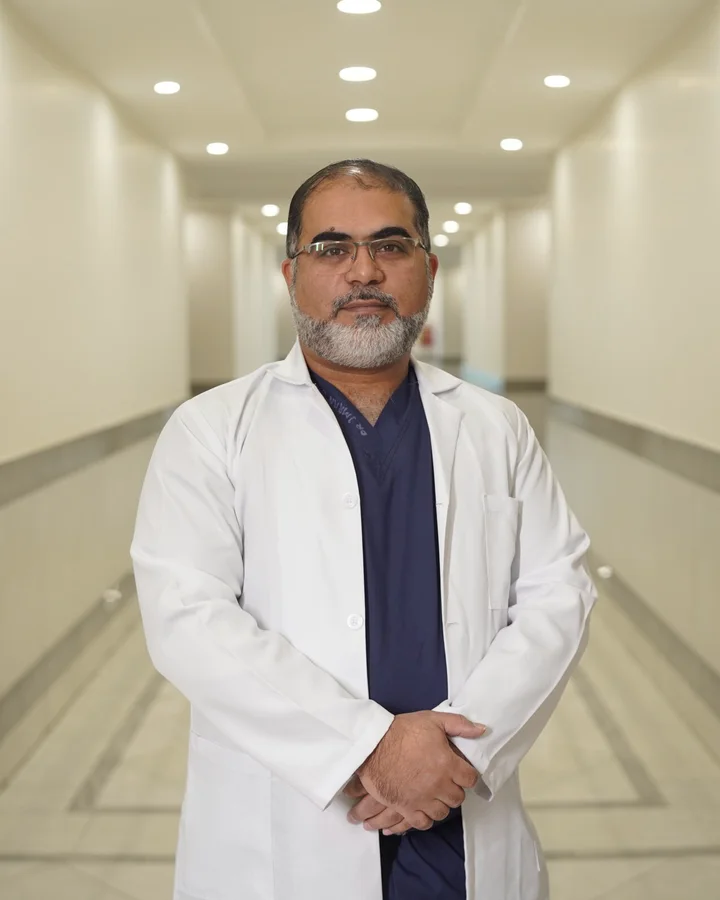
From the clinics of Dr Imran Salim Malik, orthopaedic and trauma surgeon. MBBS (Allama Iqbal Medical College) · MS (Trauma & Orthopaedics) · PMDC Reg. 39646-P. Every patient is different: Dr Malik will tell you what applies to you.