For suitable patients, it can mean less pain, less blood loss and getting up a little sooner. Long-term results are similar. It is not right for everyone.
Not sure if keyhole or small-cut surgery suits you? WhatsApp your X-ray or MRI to +92 300 4890692 to book a consultation. Dr Malik will need to examine you before advising on surgery.
How small cuts can help you
- Less pain early on: small cuts disturb less muscle, so many patients have less pain in the first days.
- Shorter hospital stay: for suitable patients, fewer days in hospital.
- Fewer wound problems: seen with some fracture operations, and the bone heals in a similar time.
- Smaller scars and less bleeding: small cuts often mean less blood loss.
About Dr Malik
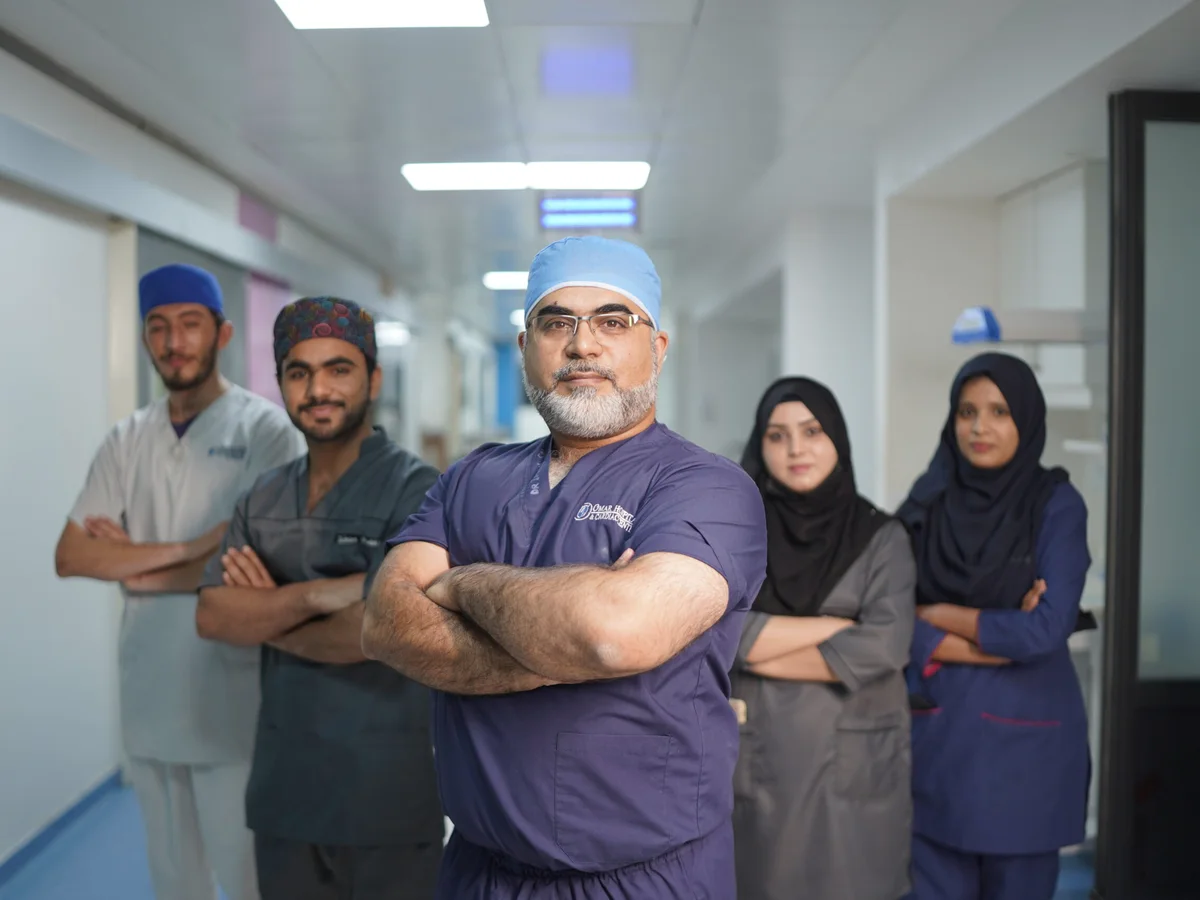
Dr Imran Salim Malik is an orthopedic and trauma surgeon. He is a consultant at Omar Hospital & Cardiac Centre, Johar Town, Lahore. He uses small-cut methods for joints, spine and fractures, where they suit the patient.
He has more than 20 years of experience in orthopedic surgery. Dr Malik performs every operation himself.
Which operations can be done with small cuts?
Hip and Knee Replacement
Hip and knee replacements can sometimes be done through a smaller cut. For suitable patients, this may mean getting up a little sooner, but the early benefit is small and long-term results are similar. Most patients walk with help within a day or two of a replacement, whatever the cut size.
With a smaller cut, the surgeon sees less of the joint. This can raise the risk of nerve injury, or of the new joint being placed less accurately. So Dr Malik chooses the approach for each patient.
Age alone does not rule out a joint replacement. The health check before surgery decides.
Arthroscopy (keyhole surgery) and ACL reconstruction
Keyhole surgery uses a tiny camera and small tools. It can treat a torn ACL or meniscus (knee cartilage).
After ACL reconstruction and strict physiotherapy, most people can return to contact sports after 6 to 12 months.
Spine surgery
Small-cut spine surgery is used for some spinal fractures, slipped discs and spinal stenosis (narrowing that squeezes the nerves). It is not suitable for every condition.
For most back and leg pain that is not an emergency, medicine, physiotherapy or an injection is tried first. Surgery is considered if these do not help, or sooner if a nerve is badly trapped. Dr Malik will explain the real risks in plain words.
Fracture Fixation
Two small-cut methods are used for many thigh, shin and arm fractures. MIPO slides a metal plate along the bone through small cuts. Intramedullary nailing places a metal rod inside the bone.
Studies show fewer wound problems than with a large open cut, and similar healing times.
Fall or suspected broken bone? Go to the nearest emergency department now, or call Rescue 1122, if the person cannot stand or put weight on the leg, a limb looks bent or a bone is showing, a hand or foot is cold, pale or numb, there is heavy bleeding, or they hit their head. An older person who cannot walk after a fall may have a broken hip and needs to go to hospital now. Do not move someone who may have hurt their neck or back.
Once the patient is safe, call +92 300 4890692 for fracture care with Dr Malik. Dr Malik can arrange care in the emergency department: WhatsApp the X-ray, the patient’s medical history and any medical conditions to the same number. If you cannot reach us, go to the nearest emergency department.
Pain injections (without surgery)
For some long-term back and joint pain, an injection guided by live X-ray, plus physiotherapy, may help. Results vary with the condition.
What happens, step by step
1. Before surgery: a health check, scans such as an X-ray or MRI, and a plan for your operation. You may need to fast. Do not stop any blood thinner or heart medicine on your own. Dr Malik and your heart doctor will tell you what to do before surgery.
2. Day of surgery: you meet the anaesthesia doctor in the morning. After the operation, you go to the recovery room.
3. Hospital stay: it depends on the operation. After keyhole knee surgery, most patients go home the same day or the next. After a knee replacement, the stay is usually about 3 days. For a hip replacement, or a broken hip in an older person, Dr Malik will tell you how long you are likely to stay.
4. Exercises: these start as soon as you are ready, with a walker or crutches if needed. You continue them at home or with a physiotherapist.
5. Full recovery: for fractures, this depends on the bone, the type of break, the fixation and your health. Some simple fractures heal in 6 to 8 weeks. Thigh and shin bone fractures usually take longer, often several months. Spinal fractures may take 8 to 12 weeks. Getting your strength back can take longer than the bone takes to heal. Stop smoking and all tobacco, including naswar and chewing tobacco. It slows bone and wound healing.
After an operation: when to get help
Go to the nearest emergency department now or call Rescue 1122 if:
- you have chest pain or sudden breathlessness
- after fracture surgery: pain that keeps getting worse despite painkillers, a limb that feels very tight, numb or tingly, or fingers or toes that are pale or cold
- after spine surgery: new leg weakness, new trouble passing urine, or numbness around the private parts
- after a hip replacement: sudden severe hip pain, a leg that looks shorter or turned, or you cannot stand on it. The hip may have dislocated.
Call the clinic the same day if:
- the wound is red, hot, swollen or leaking, or you have a fever
- your calf is painful or swollen
If you cannot reach the clinic, go to the nearest emergency department.
How live X-ray guides fracture surgery
The surgeon watches a live X-ray (fluoroscopy) on a screen. It helps line up the bone, place the implant and keep instruments away from nerves and blood vessels.
Could small-cut surgery suit you?
It depends on your problem, health, age, weight, bone quality and past surgery. Some people still need open surgery. Examples are people who are very overweight, or who have an old fracture, bone infection or nonunion (a fracture that has not healed).
Small cuts do not remove the usual risks of surgery. These include infection, blood clots, stiffness, ongoing pain, nerve or blood-vessel injury, and needing another operation. Dr Malik will explain the risks of your operation before you decide.
Before and on the day of surgery
Before Surgery
At your consultation, Dr Malik examines you and may ask for blood tests, an X-ray, CT or MRI. He will explain whether small-cut surgery suits you, and the other options, including not operating. Before surgery, you sign a consent form that explains the operation.
The Day of Surgery
Before the operation, Dr Malik meets you to go over the plan and answer questions. He marks the limb to be operated on, so there is no confusion.
Then the anaesthesia team gets you ready, and you wake up in the recovery room.
Cost, and care close to home
How much does it cost?
The consultation fee depends on the hospital you visit. We tell you the exact fee on WhatsApp before you book, so there are no surprises. A follow-up visit within 5 days of your first consultation is free to go through your reports and scans.
The cost of surgery depends on the operation, the implant, the room and the nights in hospital. It is explained to you before you decide.
No need to travel abroad
You do not need to go abroad for small-cut orthopedic surgery. Dr Malik offers it at Omar Hospital & Cardiac Centre, Johar Town, Lahore.
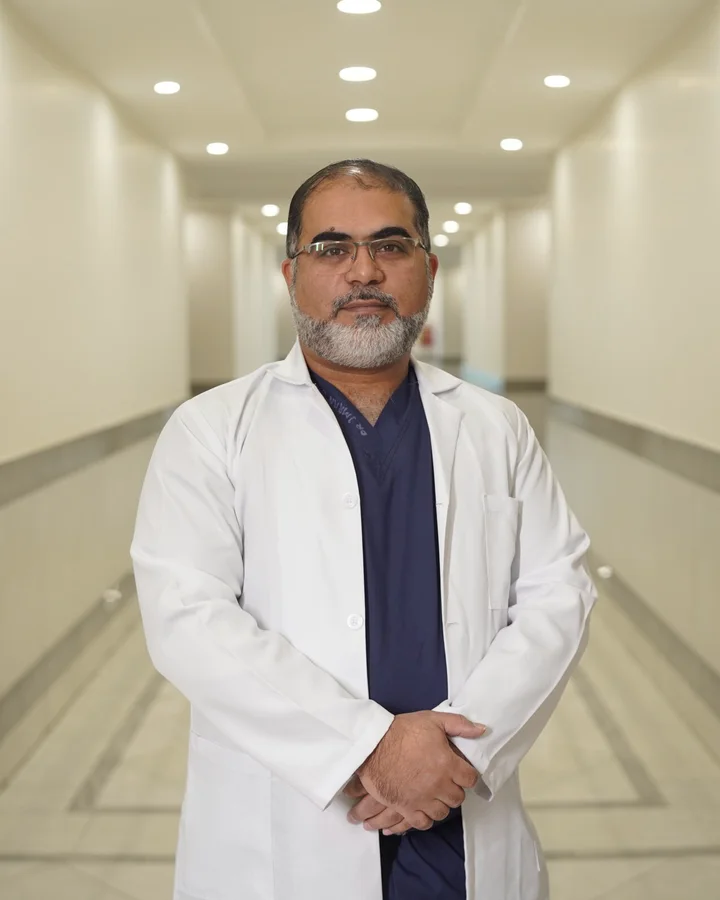
From the clinics of Dr Imran Salim Malik, orthopaedic and trauma surgeon. MBBS (Allama Iqbal Medical College) · MS (Trauma & Orthopaedics) · PMDC Reg. 39646-P. Every patient is different: Dr Malik will tell you what applies to you.