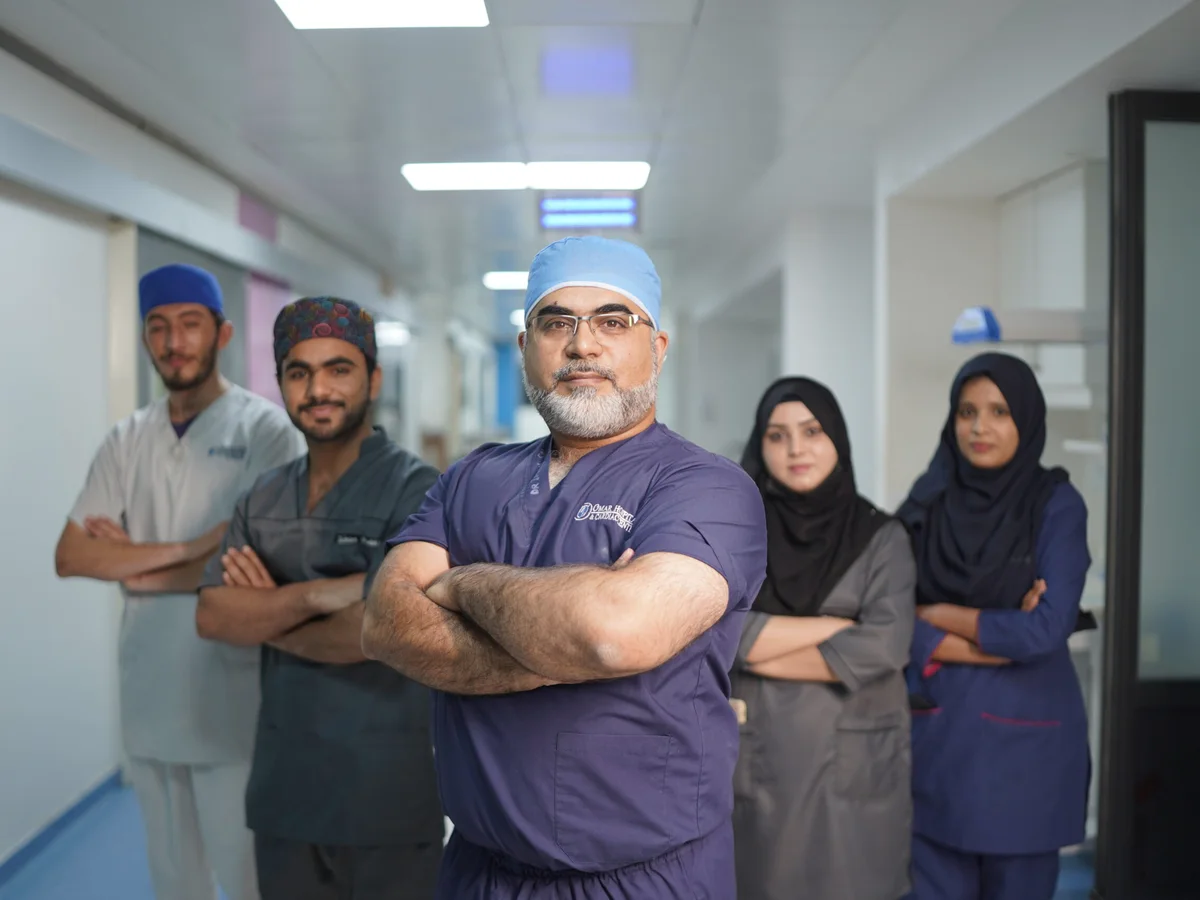
Dr Imran Salim Malik, orthopedic and trauma surgeon, does keyhole surgery at Omar Hospital & Cardiac Centre, Johar Town, Lahore. He performs every operation himself.
Just injured? Go to the nearest emergency department now, or call Rescue 1122, if the joint looks out of place, you cannot move it or put weight on it, or the hand or foot is cold, pale or numb. These can mean a dislocation, a broken bone or a damaged blood vessel.
Once the injury has been checked, WhatsApp +92 300 4890692 to book a follow-up with Dr Malik.
Injured your knee or shoulder playing sport? WhatsApp your MRI report to +92 300 4890692 to book a consultation. Dr Malik will need to examine you before advising on surgery.
What is keyhole surgery?
The surgeon puts a tiny camera and fine tools in through small cuts. He sees inside the joint on a screen, then repairs or removes the damaged part. Less of the tissue around the joint is disturbed than in open surgery.
What keyhole surgery can treat
1. Knee Arthroscopy
Common Treatments
- Torn ACL: rebuilt with a piece of your own tendon (ACL reconstruction).
- Other torn ligaments: most MCL tears (on the inner side of the knee) heal with a brace. Other ligaments sometimes need rebuilding too, and this is not always done by keyhole.
- Torn meniscus (the knee's cartilage cushion): stitched, or the torn part trimmed away.
- Damaged cartilage: a technique called microfracture helps new cartilage grow in damaged spots.
- Loose pieces and swollen lining: removed from the joint (loose body removal and synovectomy).
- A stiff knee: freed up with keyhole surgery (arthrofibrosis release).
Do you need ACL surgery?
Signs of a torn ACL are pain, swelling and a knee that gives way or feels unstable. Dr Malik examines the knee and checks your MRI to confirm the tear.
Reconstruction is considered when the knee stays unstable, especially if you play sports with sudden turns. Dr Malik will tell you whether you need an operation, or whether you can try physiotherapy first.
Already told you need ACL surgery? WhatsApp your MRI report to +92 300 4890692 to book a second-opinion consultation. Dr Malik will need to examine your knee before advising on surgery.
How ACL reconstruction is done
Dr Malik replaces the torn ligament with a piece of your own tendon (a graft). It comes from the back of the thigh (hamstring) or the front of the knee. It can also come from the outer side of the lower leg (peroneus longus).
Small buttons or dissolving screws hold the graft in place.
ACL recovery, week by week
- Weeks 0–2: learn your exercises, put weight on the leg as advised, straighten the knee fully and start working the thigh muscle.
- Weeks 3–6: bend the knee almost fully, keep up strength and stretching exercises, and walk normally.
- Weeks 6–9: keep strengthening the leg muscles.
- Weeks 9–12: keep strengthening, and add fitness work for your sport.
- Months 3–6: jogging and running drills, once Dr Malik and your physio clear you.
- Months 6–9: training for your sport, such as batting and bowling in the nets. You go back to matches only after strength and balance tests.
When can I play again? With strict physiotherapy, most people can return to contact sports, like cricket or football, after 6 to 12 months. Before you return, Dr Malik and your physio check your strength, balance and hopping.
2. Shoulder Arthroscopy
Common Repairs
A torn rotator cuff (the tendons around the shoulder joint) can be stitched back to the bone using small anchors.
Shoulder impingement (a tendon pinched under bone) is usually treated first with physiotherapy or an injection. Surgery to shave away extra bone (subacromial decompression) helps only some people.
Recovery after shoulder surgery
Recovery depends on the operation.
Shaving away bone (decompression) alone: you usually wear a sling for a few days, then start gentle exercises.
Rotator cuff repair: you wear a sling for 4 to 6 weeks. At first, the shoulder is moved gently for you. Then you start moving it yourself to build strength. Many people return to sport in 4 to 6 months. Overhead sport, such as bowling or tennis, often takes longer.
3. Ankle and Foot Arthroscopy
It can help some ankle problems, such as bone spurs pinching the front of the ankle, loose pieces or damaged cartilage. It is also used in some ligament repairs and ankle fusions (joining the ankle bones). Dr Malik will tell you whether it suits your ankle.
How pain is controlled after surgery
Numbing medicine and nerve blocks
Numbing medicine (local anesthesia) is put into the joint, and the nerves around it may be numbed too (a nerve block). You then need fewer strong painkillers.
Ice and electrical therapy
Ice packs, cold machines, and electrical therapy help lower pain and swelling.
PRP injections
PRP (a treatment made from your own blood) is sometimes used during the repair. The evidence that it helps healing is mixed, so it is not routinely needed.
Why choose keyhole surgery?
Small cuts mean less tissue damage and smaller scars. Most patients go home the same day or the next. Recovery is often quicker than after open surgery, but it varies from person to person.
Common questions
Questions families ask
How much does it cost?
The consultation fee depends on the hospital you visit. We tell you the exact fee on WhatsApp before you book, so there are no surprises. A follow-up visit within 5 days of your first consultation is free to go through your reports and scans.
The cost of surgery depends on the operation, the implant, the room and the nights in hospital. It is explained to you before you decide.
Is it safe?
Every operation has risks. After keyhole knee or shoulder surgery, these include infection, blood clots, stiffness, and pain that does not fully settle. Rarely, nerves or blood vessels are injured.
After ACL surgery, the new ligament can tear again, and some people need another operation. Dr Malik will explain your own risks before you decide.
How long in hospital, and how long off studies or work?
Most patients go home the same day or the next. Time off depends on the operation and on your studies or job. Dr Malik will tell you when you can go back. Heavy manual work and sport take longer; see the recovery plan above.
After surgery, which problems need a quick call?
Go to the nearest emergency department now, or call Rescue 1122, for chest pain, sudden breathlessness, or a hand or foot that is cold, pale or numb.
Call or WhatsApp +92 300 4890692 the same day if:
- the wound is red, hot, swollen or leaking, or you have a fever
- your calf is painful or swollen
If you cannot reach the clinic, go to the nearest emergency department.
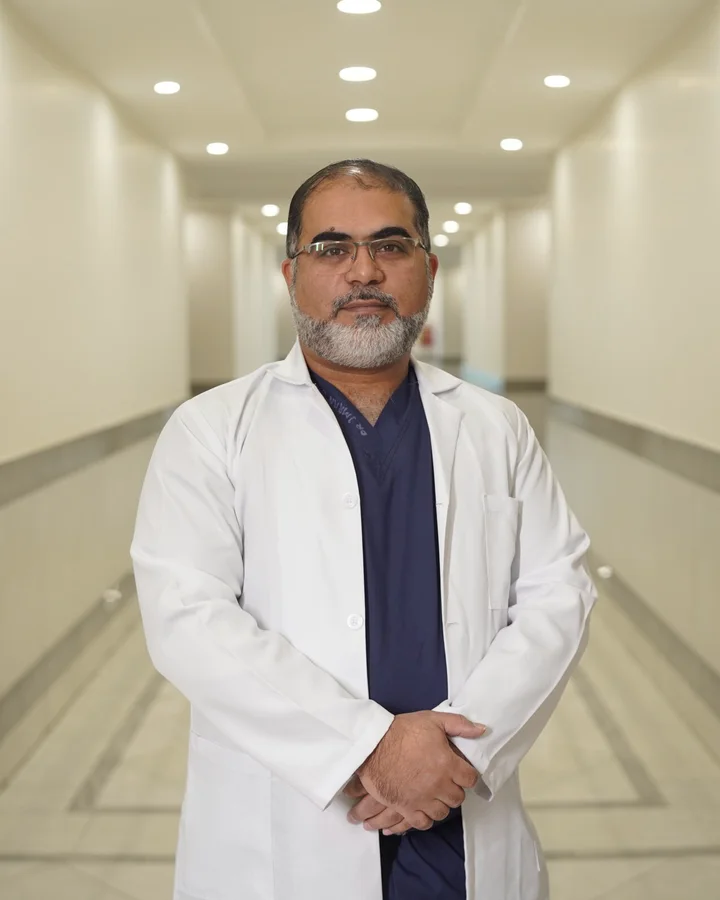
From the clinics of Dr Imran Salim Malik, orthopaedic and trauma surgeon. MBBS (Allama Iqbal Medical College) · MS (Trauma & Orthopaedics) · PMDC Reg. 39646-P. Every patient is different: Dr Malik will tell you what applies to you.