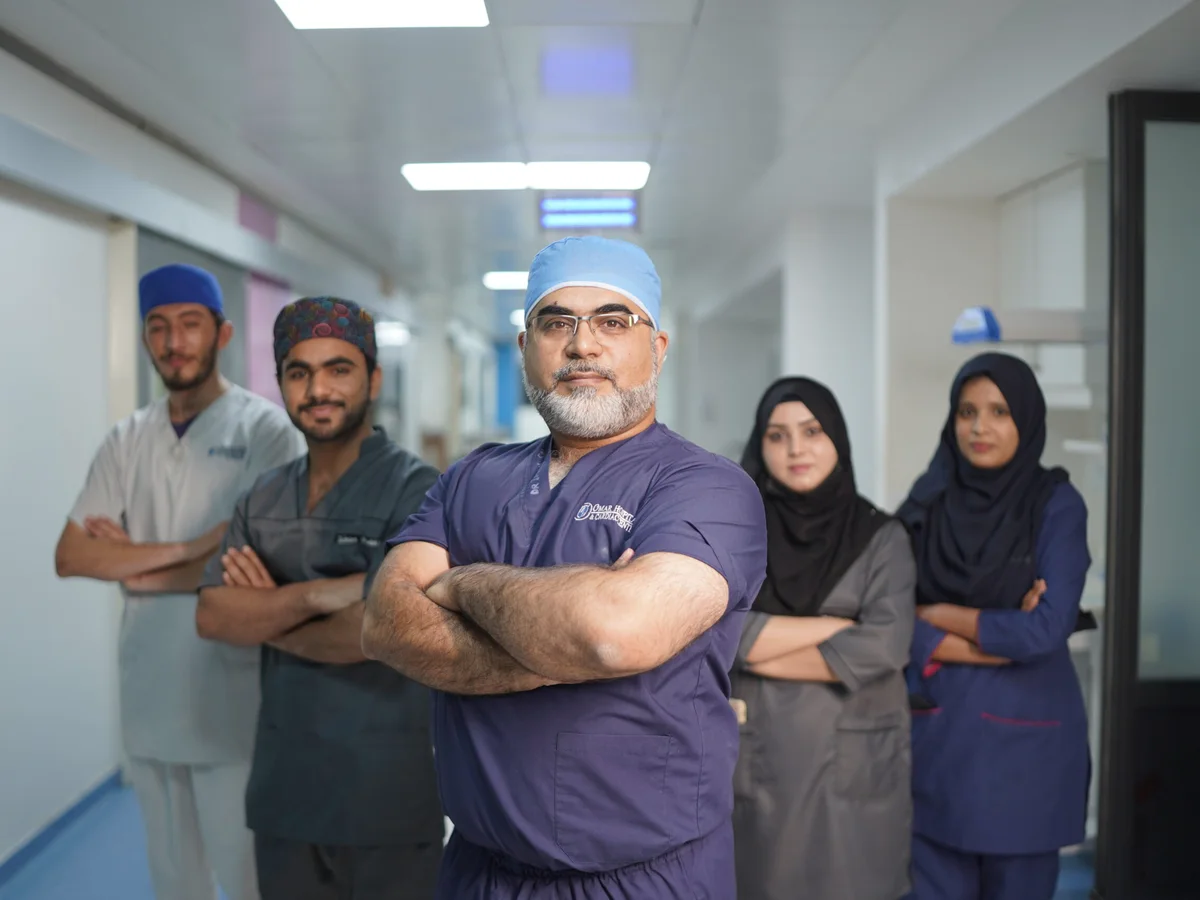
This guide explains what usually happens with Dr Imran Salim Malik at Omar Hospital & Cardiac Centre, Johar Town, Lahore.
Dr Malik has more than 20 years of experience in orthopedic surgery. He performs every operation himself.
Already been told you need an operation? A second opinion is your right. Bring your reports and Dr Malik will go through your options with you, including non-surgical ones.
Getting ready: the weeks before surgery
Getting fit before surgery lowers risks and helps healing:
- Stop smoking and all tobacco, including naswar and chewing tobacco, several weeks before. It slows bone and wound healing.
- Get sugar (diabetes) and low blood (anaemia) under control.
- Aim for a healthy weight and do gentle exercise.
- Eat enough calcium and vitamin D.
- Do not stop any blood thinner or heart medicine on your own. Dr Malik and your heart doctor will tell you what to do before surgery.
The check-up before surgery
You meet the nursing team and the anaesthetist (the doctor who puts you to sleep). They check your history and medicines and may do blood tests or an ECG (heart tracing).
Get your home ready
- Set up a bed downstairs to avoid stairs.
- Clear walkways and remove loose rugs.
- Add a night light and a bathroom handrail.
- Ask a family member to stay and help for the first couple of weeks.
What to bring to hospital
- Loose clothes, such as a shalwar kameez or a front-buttoned shirt.
- Your CNIC, old reports, and X-ray and MRI films.
- A written list of all your medicines.
- Glasses, hearing aids or dentures if you use them.
- Leave jewellery, make-up and nail polish at home.
Keep taking your usual medicines unless the doctor tells you to stop one. Bring all of them with you.
The night before
You will be told when to stop eating and drinking, and how to wash with antiseptic soap. Rest well. If you get a cold, fever or skin problem near the operation site, call the clinic straight away.
On the day of surgery
Arrive on time and change into a hospital gown. Nurses re-check your allergies and medicines and put a drip (IV line) in your arm. The operation site is marked while you watch.
Most spine operations are done under general anaesthesia, so you are fully asleep. Where the cut is made depends on the operation. It is usually in the back, but some neck operations are done from the front.
Many operations take pressure off a trapped nerve. This may mean removing a slipped disc (herniated disc) or extra bone growth (bone spur). For some slipped discs, this can be done through a small cut (see our guide to minimally invasive spine surgery).
Other operations use screws and rods to hold the spine steady (fusion), for example after a fracture or when the spine is unstable.
Is spine surgery safe? What about paralysis?
Many people fear paralysis. Serious nerve injury is rare. But like all surgery, spine surgery has risks. These include infection, bleeding, blood clots, a leak of spinal fluid, nerve injury, pain that does not fully go away, or needing another operation.
Dr Malik will explain the risks of your operation, and the other options, before you decide.
In hospital after the operation
You wake up in the recovery room. For the first 24 to 48 hours, nurses check you closely and manage your pain. Feeling sleepy and some pain at the wound are normal.
A small tube (drain) may be placed near the wound. It is removed before you go home.
How long is the hospital stay?
It depends on the operation. The stay is usually shorter after a small disc operation and longer after a fusion. Dr Malik will tell you how long you are likely to stay.
Before you go home, the team shows you how to move safely. Make sure you have a follow-up date and understand each medicine.
At home: weeks 1 and 2
At home, keep the wound clean and dry; cover it with a waterproof dressing to shower. Watch for redness spreading beyond the cut, pus, more pain or fever.
Take pain medicine on time for the first week; it works better before the pain gets bad.
Change position often and avoid sitting for long. Take short walks 3 or 4 times a day; in hot weather, walk indoors or in the cooler morning or evening. Walking helps blood flow and lowers the risk of clots.
Keep taking your usual medicines, such as for blood pressure or diabetes, unless told otherwise. Buy any new medicines before you leave hospital. Pain medicine can cause constipation; ask about a stool softener (mild laxative).
Ask Dr Malik when you can pray in your usual way, use a squat toilet and travel by car or rickshaw.
Warning signs: when to get help fast
Go to an emergency department now if you have back or leg pain with: loss of bladder or bowel control, new difficulty passing urine, numbness around the private parts, inner thighs or buttocks, or new or quickly worsening weakness in the legs.
After a neck operation, new or quickly worsening weakness in the arms or hands also needs emergency care.
After a neck operation from the front: new swelling in the neck, noisy breathing, or difficulty breathing or swallowing. Call Rescue 1122 now.
Chest pain or sudden breathlessness: this can be a blood clot in the lung. Go to the nearest emergency department now or call Rescue 1122.
Severe back or neck pain after a fall or accident: keep the person still, do not move them, and call Rescue 1122.
Call or WhatsApp +92 300 4890692 the same day if you have:
- Fever of 38°C (100.4°F) or higher, even if it comes down with paracetamol
- A sudden, sharp increase in pain that medicine does not help
- New numbness or tingling in your arms or legs that was not there when you left hospital
- The wound is red, hot, swollen or leaking. Clear, watery fluid from the wound, or a headache that is worse sitting up and better lying flat, can mean a spinal fluid leak.
- Pain or swelling in your calf (this can be a blood clot)
These can be signs of infection, a blood clot, a leak of spinal fluid or another problem. If you are not sure, call +92 300 4890692 anyway. If you cannot reach the clinic, go to the nearest emergency department.
Not had surgery yet? Back pain with a fever or feeling very unwell needs a doctor the same day. If the clinic is closed, go to an emergency department. See a doctor within days, not weeks, if back pain comes with weight loss you can't explain, pain that is worse at night, or a past history of cancer or TB.
Weeks 3 to 6: getting stronger
By weeks 3 to 4, the pain from the operation usually eases, though some ache or stiffness may remain. Many people start gentle physiotherapy around this time.
Eat protein (meat, fish, eggs, daal, dairy), fruit and vegetables. Stop smoking and all tobacco, including naswar and chewing tobacco. It slows bone and wound healing.
Numbness or tingling you had before surgery may take weeks or months to improve. New numbness that was not there when you left hospital: call the same day.
Back to work and driving: it depends on the operation
A small operation, such as removing part of a slipped disc, usually has a quicker recovery. A fusion (screws and rods) takes longer, often several months. As a rough guide:
After a small disc operation
- Desk work: often within 4 to 6 weeks, sometimes sooner.
- Physical work: usually sooner than after a fusion. Dr Malik will tell you when.
- Driving: often after 2 to 4 weeks, once you are off strong painkillers and can move freely.
After a fusion
- Desk work: often after about 6 weeks, sometimes later.
- Physical work: often after 3 to 6 months.
- Driving: usually later than after a disc operation, and only when Dr Malik agrees.
Dr Malik will give you timings for your own operation.
Keep all follow-up visits, even if you feel well.
Dr Imran Salim Malik is an orthopedic and trauma surgeon and a consultant at Omar Hospital & Cardiac Centre, Lahore.
Questions families ask
How much does spine surgery cost?
The consultation fee depends on the hospital you visit. We tell you the exact fee on WhatsApp before you book, so there are no surprises. A follow-up visit within 5 days of your first consultation is free to go through your reports and scans. The cost of surgery depends on the operation, the implant, the room and the nights in hospital. It is explained to you before you decide.
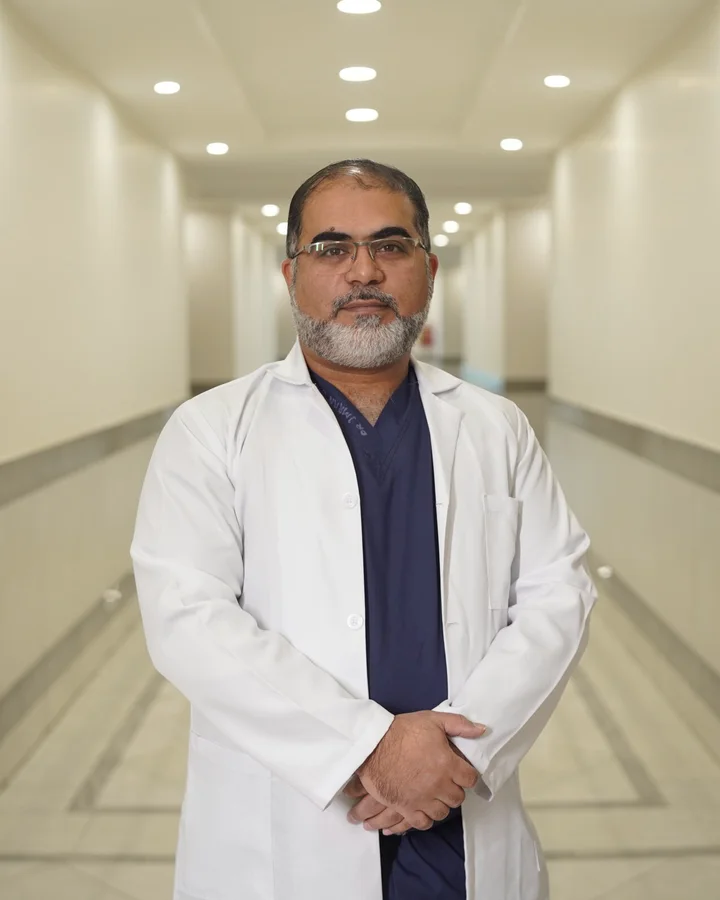
From the clinics of Dr Imran Salim Malik, orthopaedic and trauma surgeon. MBBS (Allama Iqbal Medical College) · MS (Trauma & Orthopaedics) · PMDC Reg. 39646-P. Every patient is different: Dr Malik will tell you what applies to you.