Most patients start walking with a walker (walking frame) within a day of surgery. Most go home in 2 to 4 days. Most people feel much better by 3 to 6 months. Full strength can take up to a year.
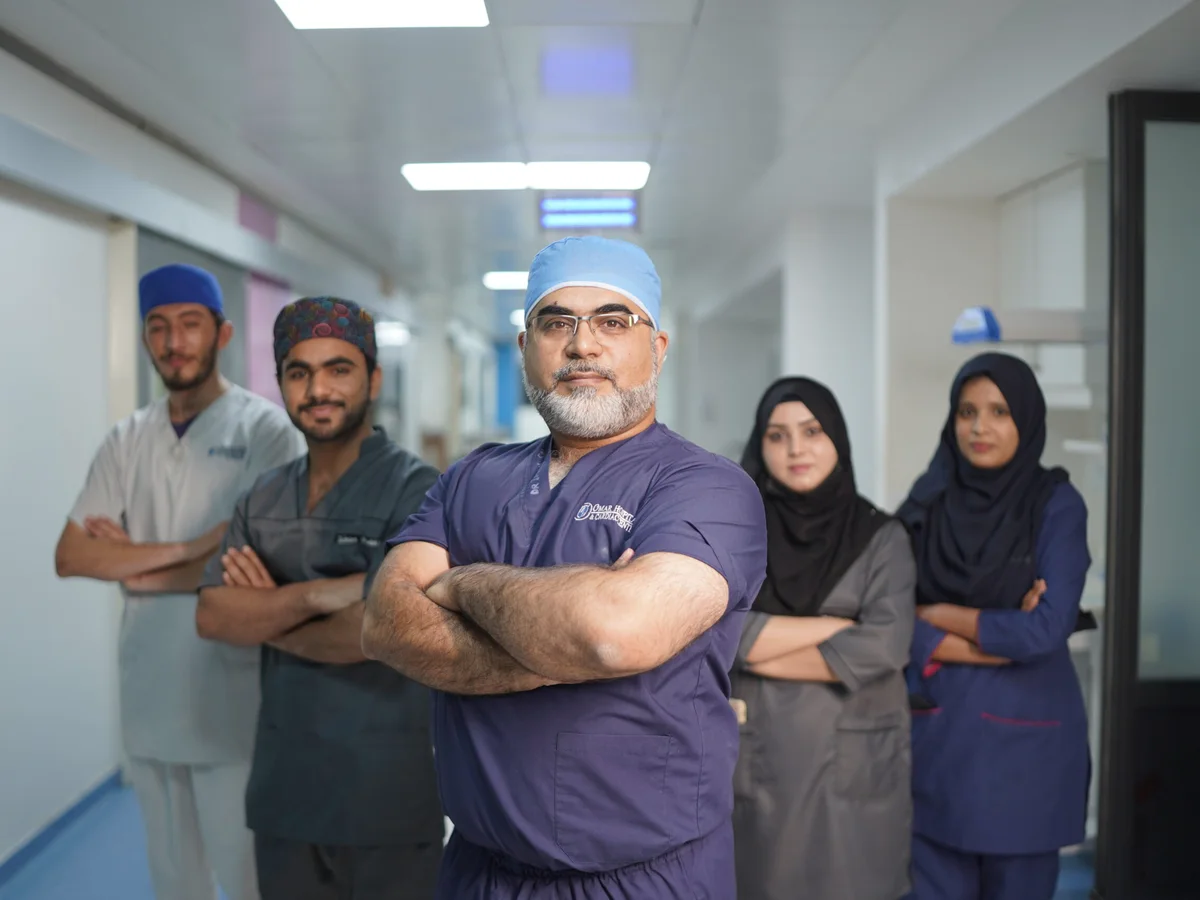
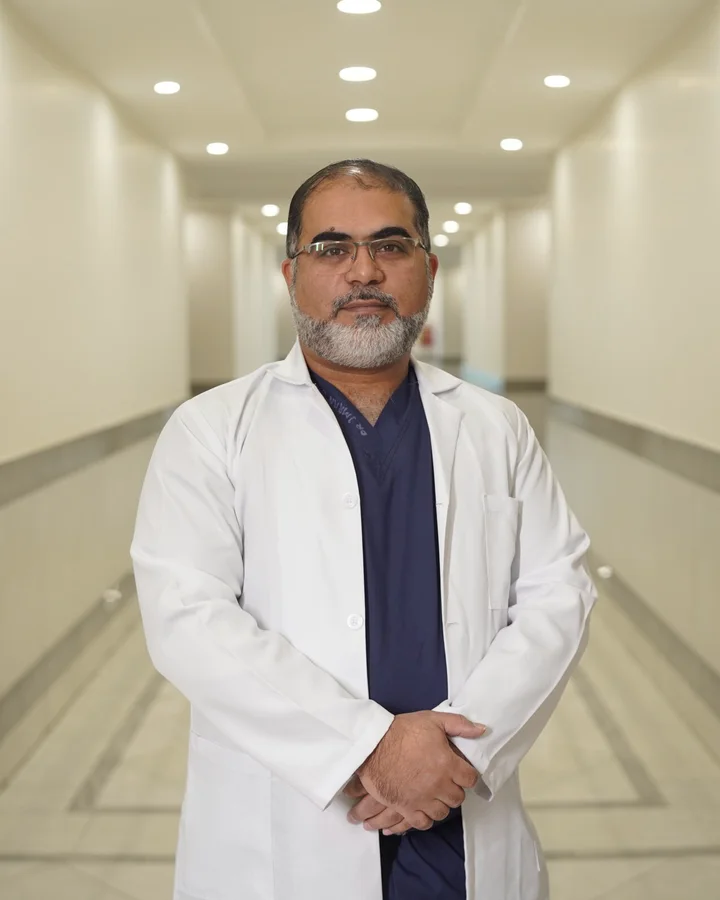
Your surgeon is Dr Imran Salim Malik, an orthopedic and trauma surgeon at Omar Hospital & Cardiac Centre, Lahore. He performs every operation himself.
Wondering if a hip replacement is right for your mother or father? WhatsApp their hip X-ray to +92 300 4890692 and book a consultation.
Fall or suspected broken bone? Go to the nearest emergency department now, or call Rescue 1122, if the person cannot stand or put weight on the leg, a limb looks bent or a bone is showing, a hand or foot is cold, pale or numb, there is heavy bleeding, or they hit their head. An older person who cannot walk after a fall may have a broken hip and needs to go to hospital now. Do not move someone who may have hurt their neck or back.
Once the patient is safe, call +92 300 4890692 for fracture care with Dr Malik. Dr Malik can arrange care in the emergency department: WhatsApp the X-ray, the patient’s medical history and any medical conditions to the same number. If you cannot reach us, go to the nearest emergency department.
What is a hip replacement?
In a hip replacement, the worn ball and socket of the hip are replaced with smooth parts made of metal, plastic or ceramic.
For arthritis, it is usually advised when hip pain limits daily life and medicine, physiotherapy and walking aids have not helped. A badly broken hip may need a replacement sooner. For most patients the operation relieves pain and improves movement. Our hip replacement procedure guide explains the operation step by step.
Some patients can have the operation through a smaller cut (minimally invasive surgery). For suitable patients this can mean less blood loss and getting up a little sooner; long-term results are similar. It is not right for everyone. Dr Malik will tell you if it suits you after examining you and seeing the X-ray.
Is my parent too old for this? Age alone does not decide. Before surgery, a physician and the anaesthesia doctor check your parent's health, and a heart doctor if needed. They look for problems such as heart disease, diabetes or high blood pressure, and manage them first. Dr Malik then advises whether the operation suits your parent.
In hospital: the first few days
After the operation, you spend a few hours in a recovery room. Doctors closely check your pulse, blood pressure and breathing. Once you are stable, you move to your hospital room. In the first days:
- Pain is kept under control with medicines your surgeon prescribes.
- Gentle exercises usually start within 24 hours. A physiotherapist shows you how to sit, stand and walk safely with a walker or crutches.
- The team works to prevent blood clots and infection. They get you walking early, give antibiotics and blood-thinning medicine (injections or tablets), and may use leg compression (special stockings or pumps).
- You may be given blood-thinning medicine to take at home for some weeks. Take it exactly as prescribed, and do not stop it early unless Dr Malik says so.
Going home: the first few weeks
Most patients go home 2 to 4 days after surgery, once they are stable and can move safely.
In the first few weeks at home:
- Some pain and swelling is normal. Ice packs and your prescribed medicines help.
- Do the exercises your physiotherapist gives you, every day.
- Keep the wound (the cut) clean and dry. Your doctor will tell you when you can shower.
- Use a walker or walking stick for the first several weeks, as advised, to prevent falls.
- Stop smoking and all tobacco, including naswar and chewing tobacco. It slows bone and wound healing.
What the family should arrange
- Someone to stay with the patient day and night at first. Dr Malik will tell you for how long.
- Help with bathing and dressing.
- A raised toilet seat or commode, and a firm chair with arms.
- Loose rugs and clutter cleared from the floor, to prevent falls.
- A bed on the ground floor, if possible.
Weeks 4 to 12: walking more on your own
By week 4, most patients notice less pain and swelling and can move more easily. Regular physiotherapy is the biggest thing you can do to help your recovery.
Over these weeks, most people:
- Move from walking with an aid to walking on their own, comfortably
- Do exercises that build hip and leg strength, balance and movement
Have a question about a parent's recovery or their hip pain? WhatsApp +92 300 4890692 and book a consultation.
Dos and don'ts while you heal
Recovery time varies from person to person. Dr Malik will give you clear instructions after surgery.
In general:
- Avoid running, jumping, twisting and bending low.
- Try gentle exercise like swimming or cycling once your surgeon says your hip is ready.
- Keep up your physiotherapy sessions and home exercises.
- Use your walking aid until you can walk safely without it.
Daily life at home: toilet, prayer and sitting
- Do not cross your legs or bend the hip sharply.
- Avoid low seats, squatting and sitting cross-legged on the floor.
- Use a raised toilet seat or a commode instead of a squat toilet.
- Pray seated on a chair at first.
- Ask Dr Malik before travelling by car. Driving is usually possible after about 8 weeks, and only when Dr Malik agrees.
The physiotherapist will teach you how to use stairs safely before you go home. Dr Malik will tell you when each of these is safe again.
Recovery takes time, so be patient with yourself.
Life after recovery
Most people feel much better by 3 to 6 months. Full strength can take up to a year. In this time your muscles get stronger and your confidence in walking grows. After that, most people have much less pain and move more easily.
To keep your new hip working well:
- Keep up regular gentle exercise to keep your hip and leg muscles strong.
- Keep your follow-up visits, so Dr Malik can check the new hip is working well.
- Avoid high-impact sports, such as running and jumping, that put heavy strain on the hip.
- Keep a healthy weight and eat a balanced diet.
Warning signs: when to get help
Hip replacement helps most patients, but no operation is free of risk. The main risks are infection, blood clots, nerve injury, ongoing pain, a difference in leg length and the hip coming out of joint (dislocation). Sometimes a further operation is needed.
Go to the nearest emergency department now or call Rescue 1122 if there is:
- chest pain or sudden shortness of breath
- sudden severe hip pain, a leg that suddenly looks shorter or turned, or you cannot stand on it. This may mean the hip has come out of its socket (dislocated). Do not try to push the hip back.
Do not wait for the clinic.
Call or WhatsApp +92 300 4890692 the same day if you notice:
- Pain that does not settle or keeps getting worse
- Swelling that does not go down
- The wound is red, hot, swollen or leaking, or you have a fever (signs of infection)
- Calf pain or swelling, or warmth or redness in the leg (a possible blood clot)
- Nerve Injury
- New numbness, weakness or difficulty moving the leg
If you cannot reach the clinic the same day, go to the nearest emergency department.
Not sure? Message us anyway. It is better to check early.
Your surgeon: Dr Imran Salim Malik
Dr Malik is an orthopedic and trauma surgeon in Lahore. He has more than 20 years of experience in orthopedic surgery. His main interests are joint replacement and spine surgery.
He treats arthritis and injuries of the hip and knee. You can talk to him in Urdu or English.
In short
Hip replacement helps people whose hip pain stops them living normally. For most people it greatly reduces pain and brings back movement.
In large joint registries from several countries, about 9 in 10 total hip replacements are still working after 15 years. Nearly 6 in 10 are still working after 25 years. These are figures from large studies, not one surgeon's own results.
Keep moving, do your exercises and follow your doctor's advice.
Questions families ask
How much does a hip replacement cost?
The consultation fee depends on the hospital you visit. We tell you the exact fee on WhatsApp before you book, so there are no surprises. A follow-up visit within 5 days of your first consultation is free to go through your reports and scans.
The cost of surgery depends on the operation, the implant, the room and the nights in hospital. It is explained to you before you decide.
From the clinics of Dr Imran Salim Malik, orthopaedic and trauma surgeon. MBBS (Allama Iqbal Medical College) · MS (Trauma & Orthopaedics) · PMDC Reg. 39646-P. Every patient is different: Dr Malik will tell you what applies to you.