Below: what to do in weeks 1–4, 4–9 and 9–14, and when to call the doctor.
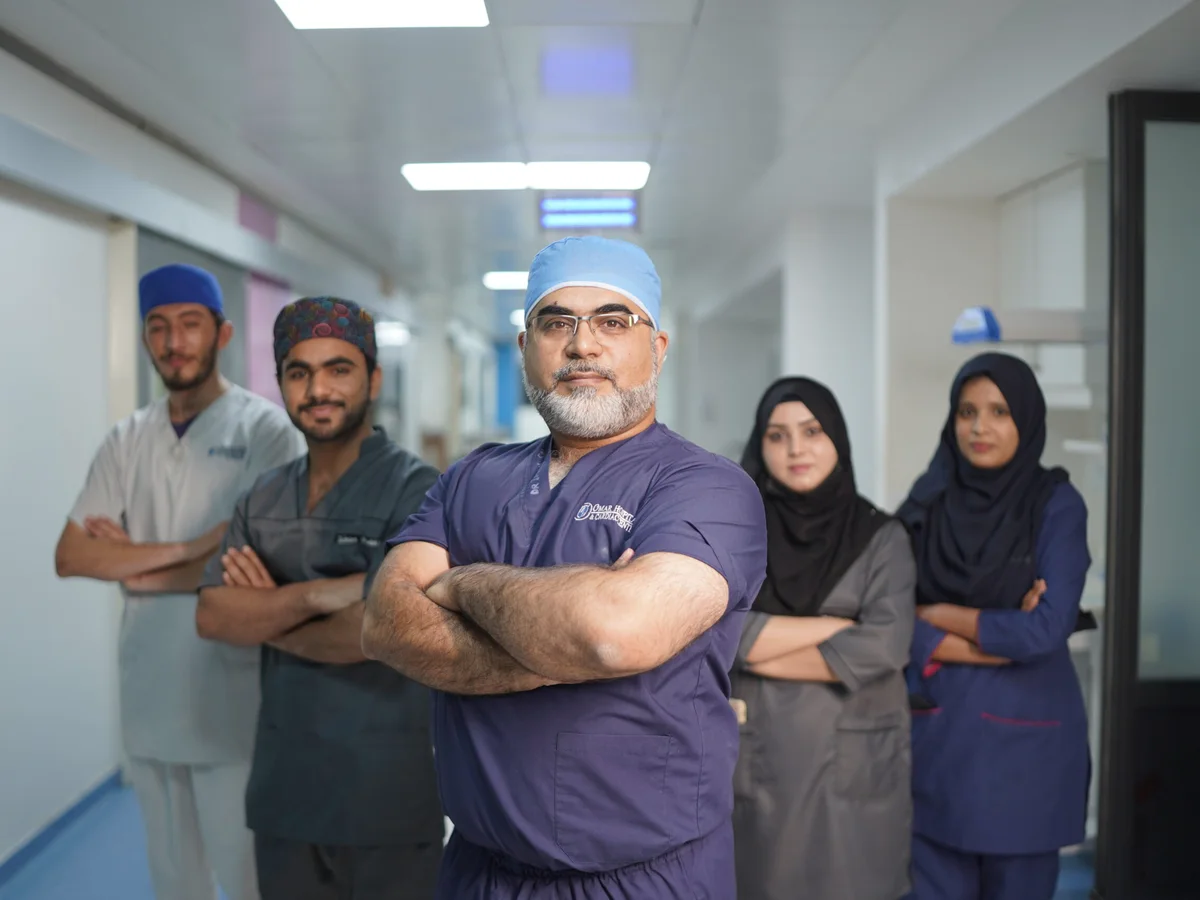
Guidance from Dr Imran Salim Malik, orthopedic and trauma surgeon at Omar Hospital & Cardiac Centre, Johar Town, Lahore.
How the hip heals, and why exercise helps
While the new hip heals, early exercises are gentle. They keep the blood moving and stop stiffness. Later exercises build strength and balance for walking.
Regular exercise helps to:
- Keep blood flowing and help healing
- Reduce pain and swelling over time.
- Get the hip moving freely again
- Strengthen the muscles around the hip
- Support safe walking and daily movement.
Exercises should never cause sharp pain. Follow the plan your surgeon and physiotherapist give you, and keep to your hip precautions (below).
Protect the new hip in the early weeks
- Do not bend the hip past a right angle (90 degrees).
- Do not cross your legs.
- Sleep on your back, or on your side with a pillow between your legs.
- Avoid low chairs and low sofas.
- Do not squat or sit cross-legged on the floor.
- Use a raised toilet seat or a commode, not a squat toilet.
- Pray seated on a chair at first.
Which precautions apply, and for how long, depends on how your operation was done. Dr Malik will tell you, and when it is safe to sit on the floor, squat and pray in the usual way.
Stage 1 (day 1 to week 4): gentle exercises
Early exercises are gentle. Most are done lying down or with a little support. Your physiotherapist will show you how often to do them.
- Ankle pumps: Slowly move your feet up and down. This keeps blood flowing in the legs, reduces swelling and lowers the risk of blood clots. You may also be given blood-thinning medicine to take at home for some weeks. Take it exactly as prescribed.
- Thigh tightening (quadriceps sets): Keep the leg straight and tighten the front of the thigh. This builds strength without loading the hip.
- Buttock squeeze (gluteal sets): Gently squeeze your buttock muscles together. This helps hip stability, posture and balance.
- Heel slides: Lying on your back, slowly slide your heel up the bed and back. This gently bends the hip and knee and eases stiffness.
- Leg slide to the side (hip abduction): Lying flat, slide the leg out to the side and back. This strengthens the hip for walking.
Stage 2 (weeks 4 to 9): standing exercises
When your physiotherapist agrees, move on to standing exercises. They build strength and balance for daily life.
- Side leg lift (standing hip abduction): Standing, lift the leg out to the side and back. This makes walking steadier.
- Leg back (standing hip extension): Standing, move the leg slowly backwards. This helps posture and a natural walking pattern.
- Knee raises: Standing, gently lift the knee, no higher than your hip. This helps hip movement and prepares you for stairs.
- Sit to stand: Slowly stand up from a firm chair and sit down again. This strengthens the hips and thighs.
- Bridge: Lying on your back with knees bent, lift your hips. This strengthens the hip and lower back muscles together.
Worried about a parent's hip pain or slow progress? WhatsApp +92 300 4890692 to book a check-up with Dr Malik.
Stage 3 (weeks 9 to 14 and after): strength, balance and stamina
Once your surgeon agrees, harder exercises build strength, balance and stamina for the long term.
- Mini squats: Only once Dr Malik has lifted your hip precautions. Bend your knees only a little, then straighten up. This strengthens the hips and legs and improves balance.
- Step-ups and step-downs: Step up onto a low step and back down. This prepares the hip for stairs and uneven ground.
- Side steps with an exercise band (lateral band walks): With a stretchy band around your legs, take small steps sideways. This helps balance.
- Exercise bike: Gentle cycling on a fixed bike improves hip movement and stamina without straining the joint. Set the seat high, so your hip does not bend past a right angle.
- Walking: Walk a little further and for a little longer each week. This brings back a normal walk and builds fitness.
Tips to support hip recovery
Daily habits matter as much as the exercises.
- Follow the plan: Do the exercises your surgeon or physiotherapist gives you, in the way they show you.
- Little and often: Regular, gentle practice works better than pushing too hard, especially early on. Build up slowly as strength improves.
- Listen to the body: Some soreness and swelling are normal in the first weeks. New or worse swelling, especially in the calf, sharp pain or sudden weakness is not, so tell the doctor.
- Good posture: Sit and stand straight. This protects the new hip and helps the muscles recover evenly.
- No smoking or tobacco: Stop smoking and all tobacco, including naswar and chewing tobacco. It slows bone and wound healing.
Warning signs: when to get help
Stop the exercises and get help if you notice any of these.
Call or WhatsApp +92 300 4890692 the same day if:
- the wound is red, hot, swollen or leaking, or you have a fever
- the calf is painful or swollen, or the leg is warm and red (a possible blood clot)
- hip pain or swelling keeps getting worse, or the hip feels loose
If the clinic is closed or you cannot get through, go to the nearest emergency department.
Go to the nearest emergency department now, or call Rescue 1122, if:
- the hip suddenly hurts badly, the leg looks shorter or turned, or you cannot stand on it. The hip may have come out of place (dislocated).
- you have chest pain, sudden breathlessness or cough up blood
Use the walker or stick for as long as you are told, and keep every follow-up appointment.
Fall or suspected broken bone? Go to the nearest emergency department now, or call Rescue 1122, if the person cannot stand or put weight on the leg, a limb looks bent or a bone is showing, a hand or foot is cold, pale or numb, there is heavy bleeding, or they hit their head. Hip or groin pain after a fall, being unable to walk, or a leg that looks shorter or turned out may mean a broken hip. Go to hospital now. After a hip replacement, these signs can also mean the new hip has come out of place. Do not try to make them stand or walk. Do not move someone who may have hurt their neck or back.
Once the patient is safe, call +92 300 4890692 for fracture care with Dr Malik. Dr Malik can arrange care in the emergency department: WhatsApp the X-ray, the patient’s medical history and any medical conditions to the same number. If you cannot reach us, go to the nearest emergency department.
Your recovery with Dr Malik
At Omar Hospital & Cardiac Centre, Dr Malik and the physiotherapy team plan your exercises. He checks your progress at each follow-up visit.
Recovery takes time, and every patient is different.
Helping a parent recover from a hip replacement? WhatsApp your question, or a short video of the exercise, to +92 300 4890692. Clinic, Monday–Saturday: Omar Hospital & Cardiac Centre, Johar Town, 7–9 PM.
Common questions
How soon can exercises start after a hip replacement?
Most patients start gentle exercises within the first day after surgery, with the hospital team's help.
Which exercises are usually done in the first weeks?
Ankle pumps, thigh tightening, buttock squeezes and heel slides are commonly recommended in the first weeks.
How long does hip recovery usually take?
It varies. Many patients improve steadily over 3 to 4 months.
What should be avoided during recovery?
Avoid high-impact activities, like running or jumping, and sudden twisting until your surgeon says it is safe. Also keep to the hip precautions above.
Do we need a physiotherapist?
Yes. Physiotherapy guides safe exercise and helps long-term recovery. The physiotherapist also tells you when to move on to the next stage.
Questions families ask
When is it safe to sit on the floor, use a squat toilet or offer namaz normally?
Not in the early weeks. Until then, use a raised toilet seat or commode, and pray seated on a chair. Dr Malik will tell you when it is safe to change this.
When can my parent climb stairs at home?
Knee raises and step-ups prepare the hip for stairs. Dr Malik and the physiotherapist will tell you when your parent is ready.
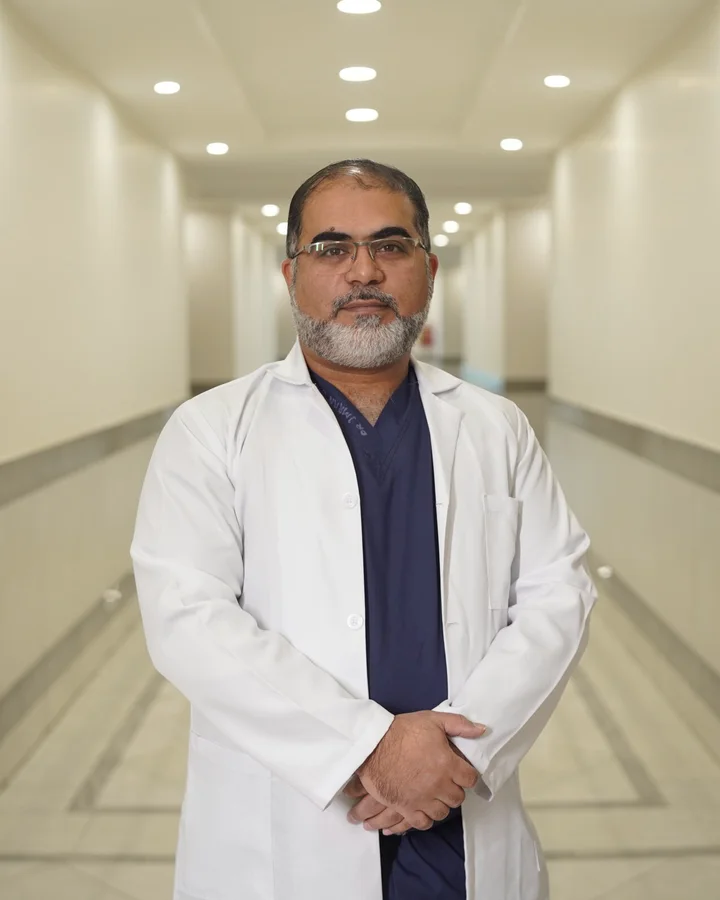
From the clinics of Dr Imran Salim Malik, orthopaedic and trauma surgeon. MBBS (Allama Iqbal Medical College) · MS (Trauma & Orthopaedics) · PMDC Reg. 39646-P. Every patient is different: Dr Malik will tell you what applies to you.