Most back pain and sciatica get better with medicines, physiotherapy and time. For most problems that are not emergencies, an operation is considered only when these have not helped. Emergencies, such as an unstable spine fracture or the warning signs below, are different and need urgent care.
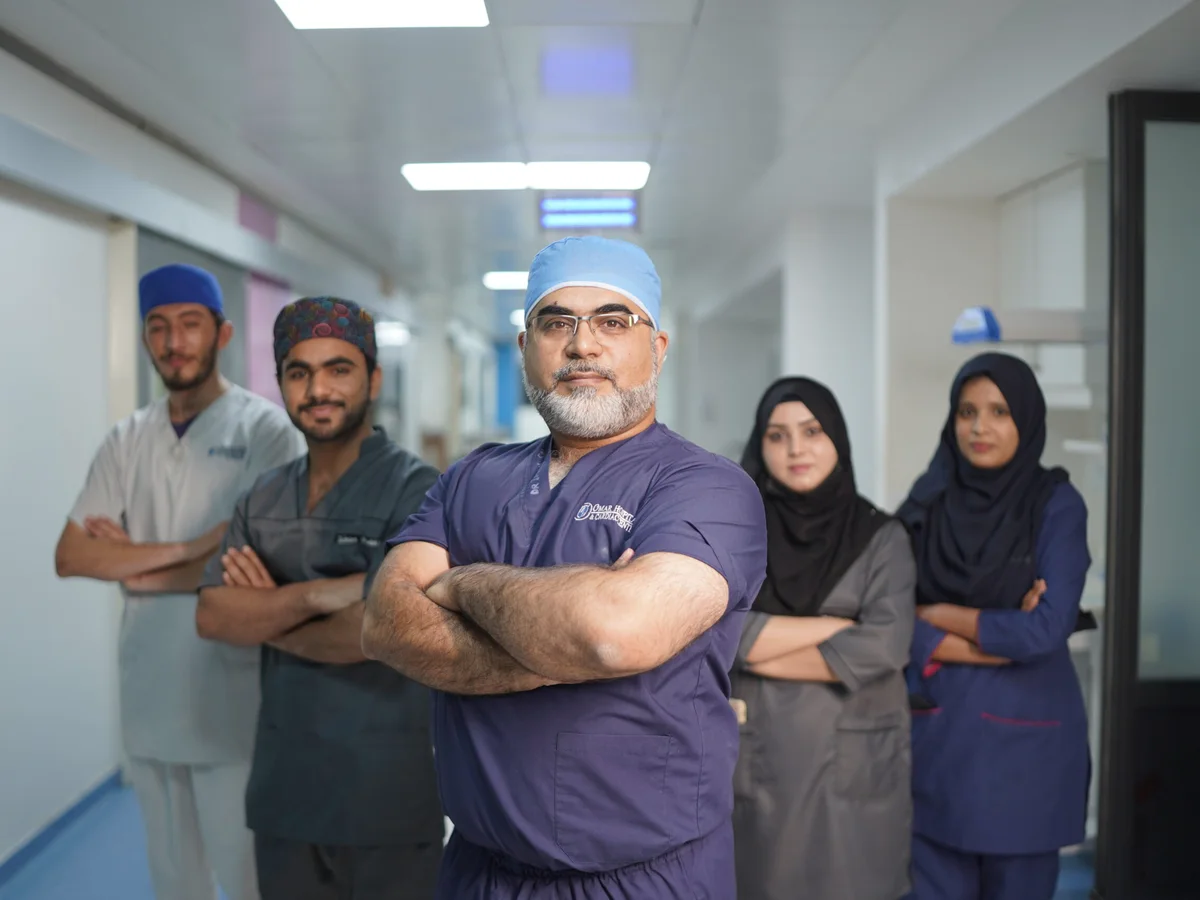
Dr Imran Salim Malik is a consultant orthopedic and trauma surgeon at Omar Hospital & Cardiac Centre, Lahore. He trained at Sheikh Zayed Hospital, Lahore, and Galway University Hospitals, Ireland. He has more than 20 years of experience in orthopedic surgery.
He treats slipped discs, broken spine bones and a slipped vertebra (spondylolisthesis). He checks your X-ray, MRI or CT scan first, and recommends surgery only when it is needed. If you need an operation, Dr Malik performs it himself.
Already been told you need an operation? A second opinion is your right. Bring your reports and Dr Malik will go through your options with you, including non-surgical ones.
Is spine surgery safe?
Many people worry about paralysis. Serious nerve injury after spine surgery is rare. Like any operation, though, it has some risks:
- infection
- bleeding
- blood clots in the legs
- nerve injury
- a leak of the fluid around the nerves (spinal fluid), which is usually repaired during the operation
- pain or other symptoms that do not fully go away
- the problem coming back and needing another operation, for example the disc slipping again
Dr Malik weighs these risks against the likely benefit and talks them through with you before you decide. Read more: How safe is spine surgery?
Go to an emergency department now if you have back or leg pain with:
- Loss of bladder or bowel control
- New difficulty passing urine
- Numbness around the private parts, inner thighs or buttocks
- New or quickly worsening weakness in the legs
Severe back or neck pain after a fall or accident: keep the person still, do not move them, and call Rescue 1122.
Back pain with a fever or feeling very unwell needs a doctor the same day. If the clinic is closed, go to an emergency department. See a doctor within days, not weeks, if back pain comes with weight loss you can't explain, pain that is worse at night, or a past history of cancer or TB.
Common spine operations, in plain words
Dr Malik offers both standard open surgery and smaller-cut (minimally invasive) surgery, when they suit the patient.
Removing part of a slipped disc (microdiscectomy)
Who it is for: leg pain from a slipped disc pressing on a nerve.
Through a small cut, the surgeon removes only the part of the disc that presses on the nerve. Blood loss is usually small, and most people are up and walking soon after the operation.
Making room for trapped nerves (decompression)
Who it is for: spinal stenosis.
The surgeon removes part of the bone (lamina) or ligament pressing on the nerves, often through small cuts. Many people regain function in 2–4 weeks, with fuller recovery by about 12 weeks.
Joining spine bones with screws and rods (fusion)
Who it is for: an unstable spine, such as a slipped vertebra (spondylolisthesis) or a curved spine (scoliosis).
The surgeon joins spine bones together with bone graft, screws and rods. The aim is to stop painful movement and further slipping. Early recovery takes 6–8 weeks; full recovery can take 6 months or more.
Cement for a collapsed spine bone (kyphoplasty)
Who it is for: a collapsed spine bone (compression fracture) from weak bones (osteoporosis) or an injury.
A small balloon is inflated inside the bone, then cement is injected to make it stable. It can ease pain from a collapsed spine bone. A large study found it eased pain more than non-surgical care in the first month; by one year the difference was smaller.
Dr Malik will also check what caused the bone to collapse and arrange treatment for weak bones, to lower the chance of another fracture.
Fixing the spine through tiny cuts (percutaneous fixation)
Who it is for: some spine fractures and deformities.
Screws and rods go in through tiny punctures in the skin, guided by live X-ray images. This steadies the spine with less muscle damage than open surgery, and recovery is often shorter.
Keyhole spine surgery (endoscopic)
Who it is for: some slipped discs and spinal stenosis.
The surgeon works through a thin tube with a tiny camera (endoscope). There is less muscle damage and blood loss than in open surgery. People often go home in 1–2 days.
How long is recovery?
Recovery depends on the operation:
- Removing part of a slipped disc: most people are up and walking soon after the operation, and build up light daily activity over the first weeks. Desk work often resumes within 4 to 6 weeks, sometimes sooner. Heavier work takes longer.
- Kyphoplasty: many people are up and about within days to weeks.
- Bigger operations (fusion of several spine bones): early recovery takes about 6–8 weeks, and full strength returns over about 6 months. Stop smoking and all tobacco, including naswar and chewing tobacco. It slows bone and wound healing.
- Hospital stay: after keyhole (endoscopic) surgery, often 1–2 days. After other smaller operations, such as disc surgery, decompression or kyphoplasty, many people go home within 1–3 days. After a fusion, Dr Malik will tell you how long you are likely to stay.
These are typical ranges, not guarantees. Dr Malik will give you a plan for your own recovery.
After surgery: when to get help
Go to the nearest emergency department now or call Rescue 1122 if you have:
- Chest pain or sudden breathlessness
- Loss of bladder or bowel control, new difficulty passing urine, numbness around the private parts, or new weakness in the legs
Call or WhatsApp +92 300 4890692 the same day if you have:
- A wound that is red, hot, swollen or leaking, or a fever
- Calf pain or swelling (a possible blood clot)
If you cannot reach the clinic, go to the nearest emergency department.
Sources
- Wardlaw D, et al. The Lancet, 2009 (balloon kyphoplasty compared with non-surgical care).
Questions families ask
How much does spine surgery cost?
The consultation fee depends on the hospital you visit. We tell you the exact fee on WhatsApp before you book, so there are no surprises. A follow-up visit within 5 days of your first consultation is free to go through your reports and scans. The cost of surgery depends on the operation, the implant, the room and the nights in hospital. It is explained to you before you decide.
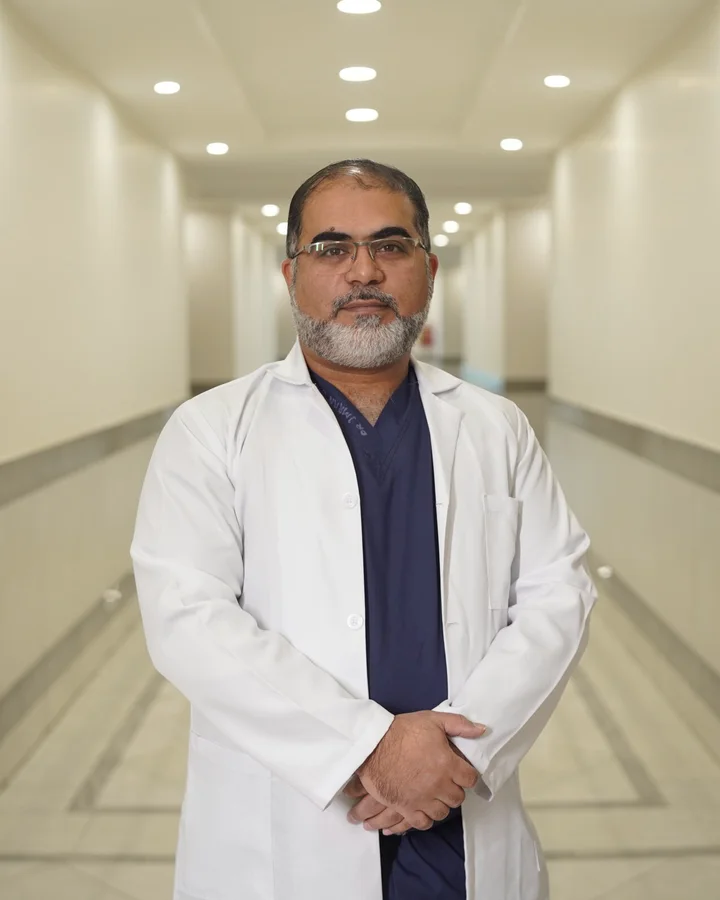
From the clinics of Dr Imran Salim Malik, orthopaedic and trauma surgeon. MBBS (Allama Iqbal Medical College) · MS (Trauma & Orthopaedics) · PMDC Reg. 39646-P. Every patient is different: Dr Malik will tell you what applies to you.