Fall or suspected broken bone?
- If the neck or back may be hurt, or they hit their head: do not move them. Call Rescue 1122 and wait.
- If there is heavy bleeding: press firmly on the wound with a clean cloth and call Rescue 1122.
- Go to the nearest emergency department now, or call Rescue 1122, if the person cannot stand or put weight on the leg, a limb looks bent or a bone is showing, or a hand or foot is cold, pale or numb.
- An older person who cannot walk after a fall may have a broken hip and needs to go to hospital now.
Once the patient is safe, call +92 300 4890692 for fracture care with Dr Malik. Dr Malik can arrange care in the emergency department: WhatsApp the X-ray, the patient’s medical history and any medical conditions to the same number. If you cannot reach us, go to the nearest emergency department.
This guide explains each step in plain words. To book with Dr Imran Salim Malik, send a photo of the X-ray on WhatsApp to +92 300 4890692.
What to do right now
- Keep the injured limb still. Support it with a pillow or folded cloth.
- If a bone is showing, cover the wound with a clean cloth. Do not push the bone back in.
- If there is heavy bleeding, press firmly on the wound with a clean cloth until help arrives.
- Collect old reports and the list of medicines the patient takes.
The short answers
- Many of these operations take 1½ to 3 hours.
- The hospital stay is often 2 to 5 days.
- If the bone has broken through the skin, antibiotics are started straight away.
- Physiotherapy starts early. When you can put weight on the leg depends on the break and how it was fixed.
- Bring all X-rays, scans and a list of medicines to the first visit.
Has an older parent broken a hip?
A broken hip in an older person usually needs an operation. It is done as soon as it is safe, once the heart, blood sugar and blood tests have been checked. Lying in bed for a long time brings its own risks, such as blood clots and chest infections.
Some broken hips are fixed with screws, a plate or a rod. Others need the broken ball of the hip replaced (a half, or partial, hip replacement). Some fitter, more active patients are offered a total hip replacement instead. Dr Malik will explain which suits your parent, and why.
The aim is to get your parent out of bed and walking with help as soon as it is safe. Physiotherapy starts in hospital. How well they walk afterwards depends a lot on how well they walked before the fall.
Parent in hospital with a broken hip? WhatsApp the X-ray to +92 300 4890692 to book a consultation. Dr Malik will need to examine your parent before advising on surgery.
What makes a fracture 'complex'?
Doctors call a fracture complex when:
- the bone breaks into several pieces
- the break goes into a joint
- the bone comes through the skin (an open fracture)
- nerves or blood vessels are at risk
X-rays and CT scans help the surgeon plan the operation and choose the implants (metal plates, screws or rods).
What happens before surgery?
In the emergency room
First, the team controls pain, supports the broken limb and checks blood flow and feeling. If the bone has broken through the skin, antibiotics go in through a drip as soon as possible, ideally within an hour.
The wound is then cleaned in the operating theatre within 12 to 24 hours, depending on the wound. This lowers the risk of infection.
X-rays and scans
You will have X-rays. Many complex breaks also need a CT scan (a detailed 3D X-ray), especially near joints, the pelvis or the hip socket. The scan helps the surgeon plan the operation.
If there are many injuries
If the patient is badly hurt or unstable, a frame outside the limb (external fixator) may hold the bones first. The final operation is done once the body has settled and it is safe.
How is a broken bone fixed?
The surgeon chooses the method that suits the break, the skin and muscle around it, and the patient's health. The four main methods are:
- Plate and screws: for breaks into a joint, or bones in many pieces. The surgeon opens over the break, puts the pieces back in place and holds them with a metal plate.
- Metal rod inside the bone (intramedullary nail): for breaks in the middle of long bones, like the thigh or shin. It goes in through small cuts near the end of the bone.
- Frame outside the limb (external fixator): for open wounds or bad swelling, or to hold the bone until the patient is stable. It can be temporary or final.
- Plate through small cuts (MIPO): for breaks where the skin and muscle need protecting. The plate slides in under the skin to protect the blood supply.
Each method works well for the right break. Small-cut plating aims to protect the blood supply, which can help healing. With a rod, many patients can put weight on the leg early. Your surgeon will explain the pros and cons for your case.
How long is the operation and the hospital stay?
For leg and hip breaks, most patients have a spinal anesthetic (numb from the waist down) or a general anesthetic (asleep). For arm breaks, a nerve block (numbs the arm) or a general anesthetic is used.
Many of these operations take 1½ to 3 hours. Very complex breaks can take longer. The hospital stay is often 2 to 5 days, depending on how the patient is doing.
WhatsApp the X-ray to +92 300 4890692 to book a consultation. Dr Malik will need to examine the patient before advising on surgery.
How the team keeps the patient safe
Like any operation, fracture surgery has risks. These include infection, blood clots, injury to a nerve or blood vessel, stiffness, ongoing pain, and the bone healing slowly or not joining, which may need another operation. Dr Malik will go through your own risks before surgery. The team takes these steps to lower them:
Preventing infection
The team keeps everything clean and handles the skin and muscle gently. For open wounds, early antibiotics and early cleaning in theatre matter most.
Preventing blood clots
Breaks in the leg and hip can cause blood clots. Many patients get blood-thinning injections and leg pumps or stockings, often for 10 to 35 days. This depends on the operation and how well the patient is moving.
If you are sent home with blood-thinning medicine, take it exactly as prescribed.
Calf pain or swelling, or a warm, red leg, can be a sign of a clot. See the warning signs below.
Checking nerves and blood flow
The team checks blood flow and feeling in the limb before and after the bone is set. They check again after surgery and during recovery.
Warning signs after surgery
Go to the nearest emergency department now (or call Rescue 1122) if:
- the cast, splint or bandage feels too tight
- fingers or toes go numb, cold, pale or blue
- pain keeps getting worse despite painkillers
You can also call +92 300 4890692 to let Dr Malik's team know.
Call the clinic the same day if:
- the wound is red, hot, swollen or leaking, or there is a fever
- the calf is painful or swollen, or the leg is warm and red
If you cannot reach the clinic, go to the nearest emergency department.
Go to the nearest emergency department now or call Rescue 1122 if there is chest pain, coughing up blood or sudden breathlessness.
When can they walk and work again?
First 2 weeks
The first check-up looks at the wound and new X-rays. Stitches or staples come out around day 10 to 14. Gentle movement starts, as advised.
Weeks 3–6
Physiotherapy builds movement and strength. Your surgeon will tell you when you can put some or all of your weight on the leg. This depends on the bone and how it was fixed.
Weeks 6–12
The bone starts to join, and you can do more, step by step. Desk work is often possible from about 6 weeks, depending on the injury. Manual and heavy work take longer.
After 3 months
Many patients are back to daily routines. Sport and heavy work return slowly, once X-rays show the bone has joined. Breaks into a joint may need longer physiotherapy.
Stop smoking and all tobacco, including naswar and chewing tobacco. It slows bone and wound healing.
How Dr Malik can help
Dr Imran Salim Malik is an orthopedic and trauma surgeon (bones, joints and injuries). He has more than 20 years of experience in orthopedic surgery. He is a consultant at Omar Hospital & Cardiac Centre, Johar Town, Lahore.
He fixes complex fractures so the bone is held firmly and the limb can work again. If you need an operation, Dr Malik performs it himself. Each patient gets a treatment plan and recovery goals for their own injury.
What to bring to your first visit
- X-rays, CT or MRI scans, on a CD or printed
- A list of medicines and allergies
- Details of any other injuries
- Your questions about work, sport and travel
What to do next
A complex fracture can sound frightening. Most broken bones heal well with the right plan, though some patients need longer physiotherapy or a further operation.
Questions families ask
How much does it cost?
The consultation fee depends on the hospital you visit. We tell you the exact fee on WhatsApp before you book, so there are no surprises. A follow-up visit within 5 days of your first consultation is free to go through your reports and scans. The cost of surgery depends on the operation, the implant, the room and the nights in hospital. It is explained to you before you decide.
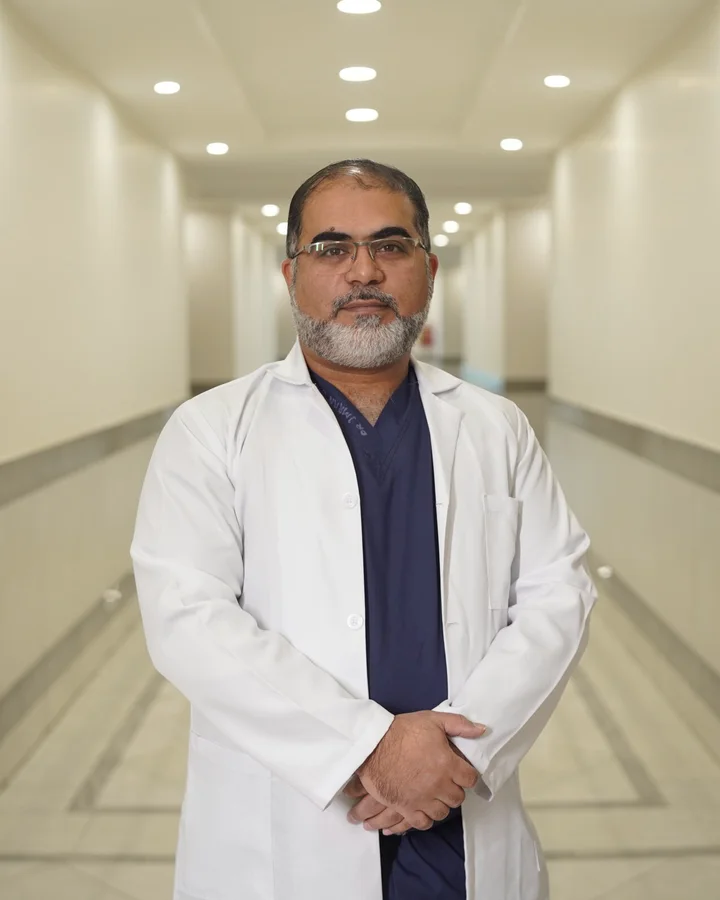
From the clinics of Dr Imran Salim Malik, orthopaedic and trauma surgeon. MBBS (Allama Iqbal Medical College) · MS (Trauma & Orthopaedics) · PMDC Reg. 39646-P. Every patient is different: Dr Malik will tell you what applies to you.