The good news: most new back pain gets better within a few weeks, without surgery.
If you do need surgery, the right decision matters more than the latest technique.
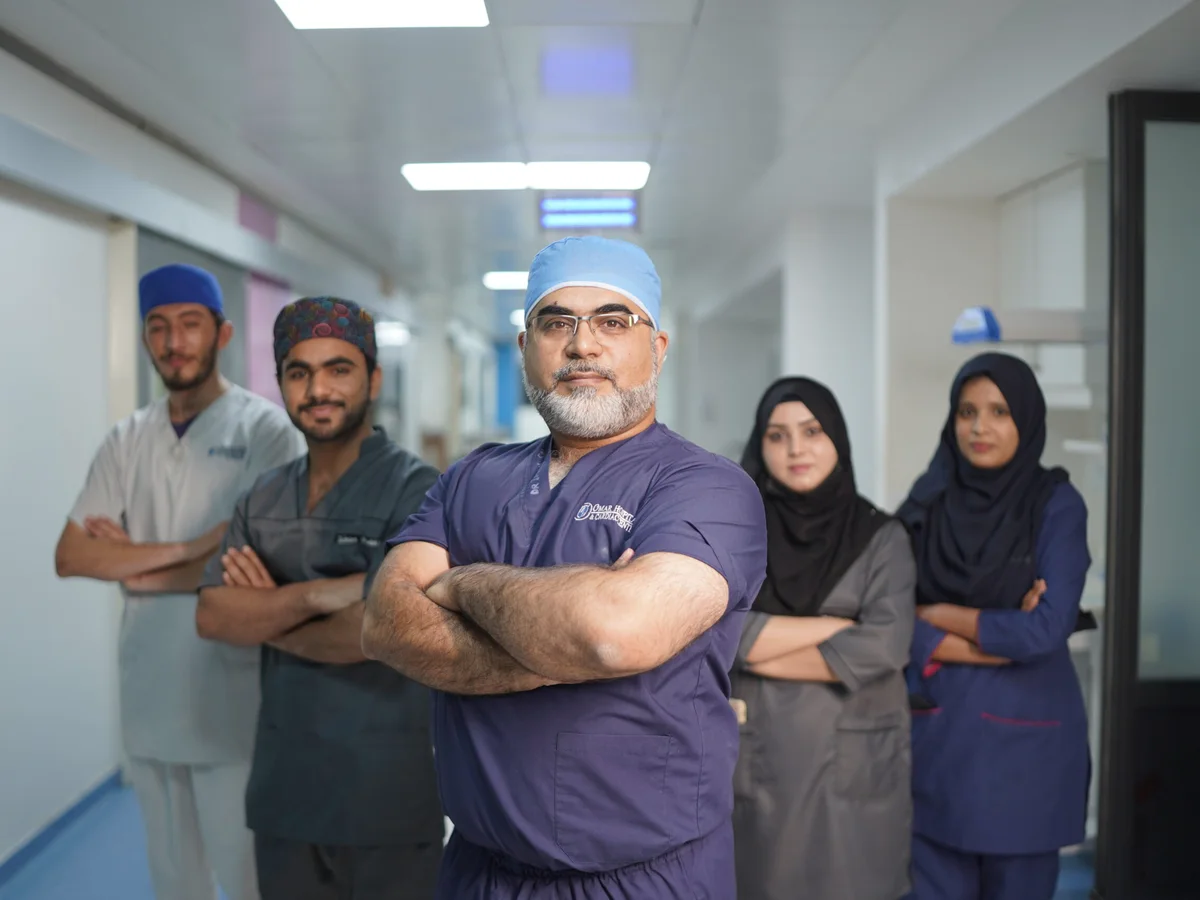
Dr Imran Salim Malik is a consultant orthopedic and trauma surgeon in Lahore.
WhatsApp your MRI report, if you have one, to +92 300 4890692 to book a consultation. Dr Malik will need to examine you before advising on surgery.
Clinic, Monday–Saturday: Omar Hospital & Cardiac Centre, Johar Town, 7–9 PM. Urdu or English, whichever you prefer.
Already been told you need an operation? A second opinion is your right. Bring your reports and Dr Malik will go through your options with you, including non-surgical ones.
When is spine surgery needed?
Surgery is usually considered only when pain lasts, gets worse, or comes with numbness, weakness or pins and needles in the legs.
What does a spine surgeon treat?
A spine surgeon is an orthopedic surgeon or neurosurgeon with extra training in back and neck problems, such as:
- Slipped disc (herniated disc)
- Narrowing of the spinal canal that squeezes the nerves (spinal stenosis)
- Wear and tear of the discs (degenerative disc disease)
- Sciatica (pain running down the leg from a pinched nerve)
- Broken bones in the spine (spinal fractures)
- A spine that slips or moves too much (spinal instability)
A careful surgeon looks at every option before suggesting an operation. For most problems that are not emergencies, treatment without surgery comes first.
When should you see a spine surgeon?
Book a check-up if you have any of these:
- Back pain lasting more than 6–8 weeks
- Pain running down one or both legs
- Numbness, tingling or weakness in the arms or legs Sudden weakness, numbness or drooping on one side of the body or face can be a stroke: call Rescue 1122 now. Arm weakness that is getting worse quickly needs to be seen the same day.
- Trouble standing, walking or keeping your balance
These signs can mean a nerve is being pressed. An MRI or CT scan shows the cause.
Back pain with a fever or feeling very unwell needs a doctor the same day. If the clinic is closed, go to an emergency department. See a doctor within days, not weeks, if back pain comes with weight loss you can't explain, pain that is worse at night, or a past history of cancer or TB.
Loss of bladder or bowel control, or leg weakness that is new or getting worse fast, is an emergency. Do not book a check-up: see the box below and go now.
Go to an emergency department now if you have back or leg pain with: loss of bladder or bowel control, new difficulty passing urine, numbness around the private parts, inner thighs or buttocks, or new or quickly worsening weakness in the legs.
Severe back or neck pain after a fall or accident: keep the person still, do not move them, and call Rescue 1122.
For a spine problem that is not an emergency, WhatsApp or call Dr Malik on +92 300 4890692.
What to try before surgery
New low back pain usually gets better within a few weeks. Keep gently active, because long bed rest makes stiffness worse.
If the pain lasts, doctors usually try these before suggesting an operation:
- Anti-inflammatory medicines
- Muscle relaxants
- Physiotherapy with a trained therapist
- Changes in daily habits and posture
- Steroid injections near the nerve (epidural injections)
Surgery may be needed when:
- Pain stops you doing everyday things
- Weakness or numbness is getting worse
- Your MRI or CT scan shows a clear problem that explains your pain
- Other treatments have not helped
The aim of surgery is not just to ease pain. It is to treat the cause of the problem.
Not sure if you need surgery? WhatsApp your MRI report to +92 300 4890692 to book a consultation. Dr Malik will need to examine you before advising on surgery. No MRI yet? You can still book. Dr Malik will tell you if you need a scan.
Which operation for which problem?
Different problems need different operations. Many can be done through smaller cuts (minimally invasive surgery), if that suits you.
- Slipped disc: the piece of disc pressing on the nerve is removed (discectomy). At some centres this is done through a tiny cut with a camera (endoscopic). This is a smaller operation, so recovery is usually quicker.
- Narrow spinal canal (spinal stenosis): part of the bone at the back of the spine is removed to give the nerves more room (laminectomy). Recovery depends on how much of the spine is treated.
- Nerve squeezed where it leaves the spine: the opening is widened to free the nerve (foraminotomy). On its own, this is a smaller operation than fusion, so recovery is usually quicker.
- Unstable spine or broken spine bone: the bones are held with screws and rods (fixation or fusion). Recovery from fusion takes longer, often several months.
- Spine bone collapsed because of thin bones (osteoporosis): if it stays painful, a cement injection through a needle (kyphoplasty) can sometimes ease the pain. This is a much smaller procedure than fusion.
Smaller-cut surgery does not suit every problem. Dr Malik will tell you which operation, if any, suits you, and how long you are likely to stay in hospital.
Laser disc treatment is sometimes advertised, but the evidence that it helps is limited.
What are the risks of spine surgery?
Can spine surgery cause paralysis? Serious nerve damage, including paralysis, is uncommon.
It is normal to feel scared, and no operation is free of risk. The main risks of spine surgery are:
- infection
- bleeding
- nerve injury
- a small tear in the lining around the nerves (dural tear)
- blood clots in the legs
- pain that does not fully go away
- sometimes, the need for a further operation
Dr Malik performs every operation himself. He goes through your own risks with you before you decide.
How to choose the right spine surgeon in Lahore
Good results depend on the right diagnosis and the surgeon's training. Here is what you can check:
1. Registered qualifications
Check that the surgeon is registered with the PMDC and holds a qualification in orthopedic surgery or neurosurgery, such as MS or FCPS. You can check a doctor's registration on the PMDC website. Dr Malik's details are listed below.
2. Experience with your operation
Ask which operations the surgeon does regularly, including smaller-cut methods, and at which hospital.
3. Clear advice, and time to decide
A careful surgeon tries treatment without surgery first, when that is safe. You should hear the other options, your own risks and what recovery involves. Then you should have time to talk it over with your family.
Ask about the hospital too: good scans, a well-equipped operating theatre and close care after surgery.
Your spine care with Dr Malik
Dr Malik's main interests are joint replacement and spine surgery. He uses smaller-cut (minimally invasive) methods where they suit the patient. He has more than 20 years of experience in orthopedic surgery.
At your consultation he examines you, looks at your scans and makes a plan with you. For most problems that are not emergencies, non-surgical options come first.
- Operations Dr Malik performs
Disc removal (discectomy), decompression (more room for the nerves), fixing the spine with screws and rods, and a cement injection that can ease pain from a collapsed spine bone (kyphoplasty).
How to book a spine consultation
Back pain should not control your life. If treatment has not helped, or you have leg pain, numbness or weakness, come and see Dr Malik.
WhatsApp a photo of your MRI report, if you have one, and one line about your pain to +92 300 4890692. We will reply to arrange your appointment. No MRI yet? You can still book.
Common questions
What is minimally invasive (smaller-cut) spine surgery?
The surgeon works through small cuts with special instruments. For suitable patients it can mean less blood loss and getting up a little sooner. Long-term results are similar. It is not right for everyone.
Is spine surgery safe? Can it cause paralysis?
Serious nerve damage, including paralysis, is uncommon. But no operation is free of risk. Dr Malik will explain your own risk at your consultation, before you decide.
And remember: most back and leg pain gets better without an operation.
What is the success rate of spine surgery?
It depends on the problem. Results are generally good when surgery is done for the right diagnosis. Dr Malik will tell you what to expect in your case.
How much does spine surgery cost in Lahore?
The consultation fee depends on the hospital you visit. We tell you the exact fee on WhatsApp before you book, so there are no surprises. A follow-up visit within 5 days of your first consultation is free to go through your reports and scans.
The cost of surgery depends on the operation, any implants (screws and rods), the room and the nights in hospital. It is explained to you before you decide.
How long will I be in hospital and off work?
It depends on the operation. Removing part of a slipped disc is a smaller operation, and recovery is usually quicker. Fusion (screws and rods) takes longer, often several months. Heavy or manual work takes longer to return to than desk work.
Dr Malik will tell you how long you are likely to stay. He will also give you a clear plan for going back to work.
Stop smoking and all tobacco, including naswar and chewing tobacco. It slows bone and wound healing.
Questions families ask
What warning signs should I watch for after spine surgery?
- The wound is red, hot, swelling or leaking, or you have a fever: call the clinic the same day.
- Pain or swelling in the calf: call the same day.
- If you cannot reach the clinic, go to the nearest emergency department.
- New numbness or weakness in the legs, or loss of bladder or bowel control: go to emergency now.
- Chest pain or sudden breathlessness: go to the nearest emergency department now or call Rescue 1122.
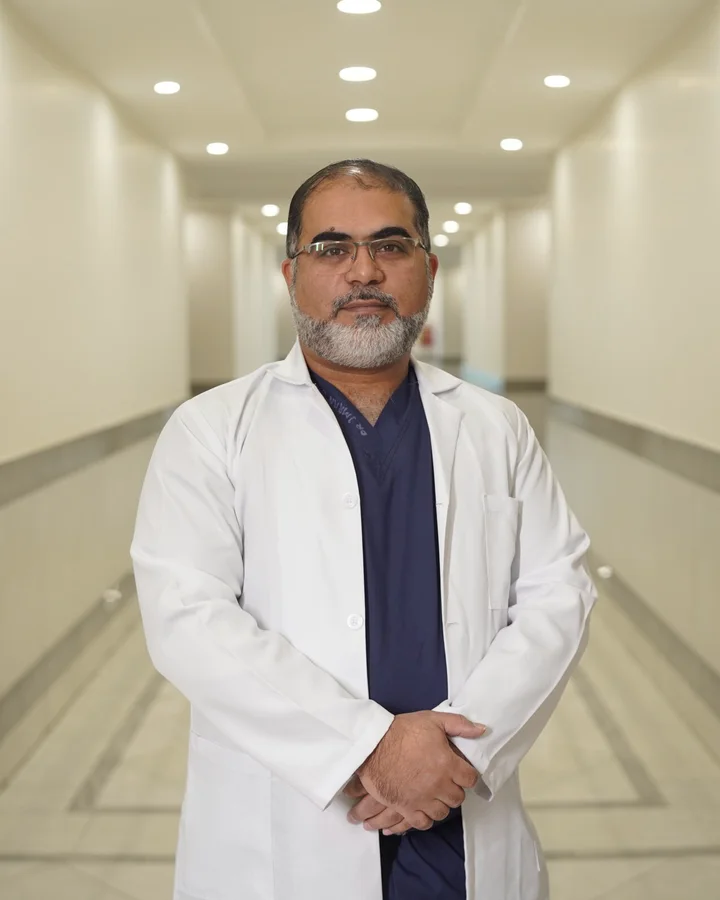
From the clinics of Dr Imran Salim Malik, orthopaedic and trauma surgeon. MBBS (Allama Iqbal Medical College) · MS (Trauma & Orthopaedics) · PMDC Reg. 39646-P. Every patient is different: Dr Malik will tell you what applies to you.